Autumn migration changes the rhythm of a UK garden. A feeder that was visited mainly by blue tits, house sparrows and goldfinches in August may suddenly attract robins defending feeding spots, blackbirds searching beneath shrubs, and passing birds pausing where natural food is scarce. The recent Yahoo Creators feature asks whether feeders are ready for autumn and what should be offered during migration season. For British householders, the important point is not simply to put out more food. It is to provide appropriate, hygienic and dependable supplementary feeding while protecting birds from avoidable disease and predator risk.
Migration is energetically demanding, but feeders are not a universal solution for every migrant. Many species travelling through or leaving the UK feed principally on insects, berries, seeds in wild plants or food found in wetlands and fields. A well-managed feeder station can nevertheless support familiar garden birds as temperatures fall, and may help some birds replenish energy during poor weather. The best autumn approach combines high-quality feed with habitat: berry-bearing plants, leaf litter, clean water and cover.
Table of Contents
Advertisement
What autumn migration means in a UK garden
Autumn is not one single movement of birds in one direction. Some summer visitors, including swallows, house martins and willow warblers, depart south. Other species move within Britain, while winter visitors such as redwings and fieldfares begin arriving from northern Europe as the season progresses. Many garden regulars also become more visible because changing weather and shrinking natural food supplies bring them closer to homes.
This matters because a feeder cannot be designed around the assumption that every bird needs peanuts or sunflower hearts. House martins catch flying insects and will not queue at a seed feeder. Redwings usually favour berries and fallen fruit. Goldfinches are strongly associated with small seeds, while robins, dunnocks and blackbirds often benefit more from food offered at ground level or on a low, sheltered table.
The practical objective is therefore resilience rather than maximum traffic: make the garden a reliable stop for the species that naturally use it, without creating a dirty, crowded feeding point.
The best foods to offer during autumn
Sunflower hearts: the dependable core feed
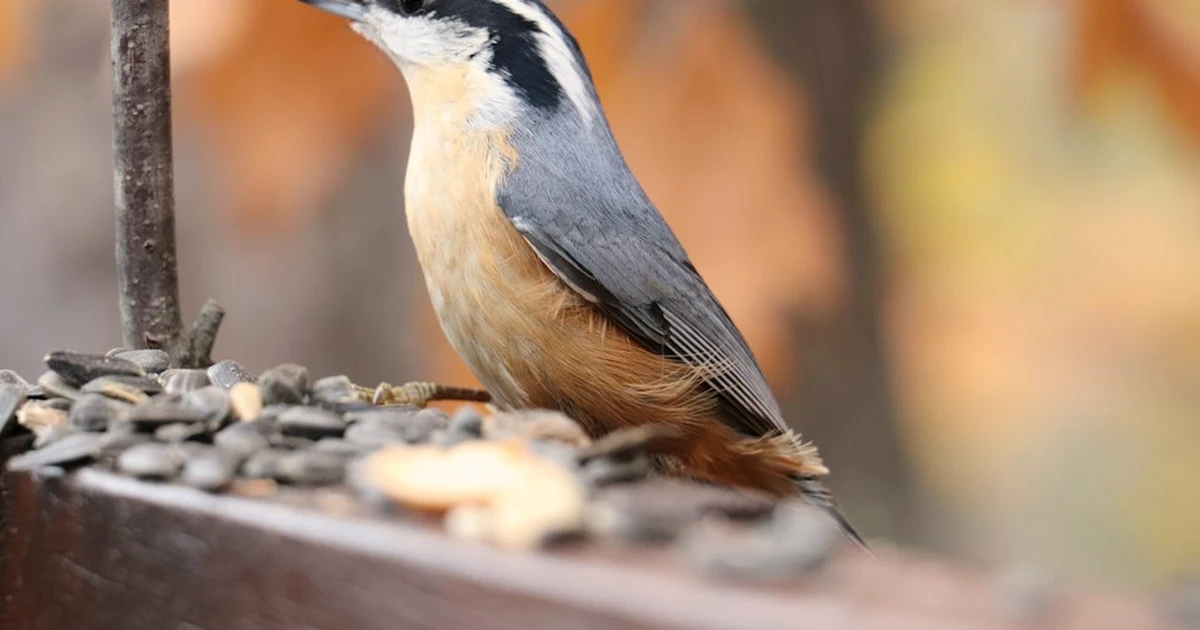
Sunflower hearts are an excellent autumn staple for many UK feeder birds, including tits, finches, nuthatches and siskins. They provide concentrated energy and produce less husk waste than black sunflower seeds, which can make cleaning easier. Use a quality seed feeder with ports suited to the birds you wish to attract, and refill modestly but regularly rather than allowing food to sit for weeks.
Husk-free mixes can also be useful on patios and small urban gardens because they reduce the seed debris that may attract rodents. However, ‘no mess’ does not mean ‘no maintenance’: spilled food and droppings still need clearing.
Peanuts, but only in a safe feeder
Peanuts are calorie-dense and valuable in cooler conditions, particularly for tits, nuthatches and great spotted woodpeckers. Offer only fresh, aflatoxin-tested bird food peanuts in a robust mesh feeder. Never put loose whole peanuts on a ground tray where young birds could attempt to swallow large pieces, and do not use salted, flavoured or human snack peanuts.
Peanuts can go mouldy if exposed to repeated rain. Check them frequently, especially in damp September weather, and discard any that smell musty, look discoloured or clump together.
Nyjer and small seeds for finches
If goldfinches are regular visitors, nyjer seed in a purpose-built feeder can be worthwhile. Finches may also take finely chopped sunflower hearts or a good small-seed blend. Buy enough for a short period rather than storing large bags in a warm shed; seed keeps best in a cool, dry, rodent-proof container.
Mealworms as a limited supplement
Dried or live mealworms can be useful for robins and other insect-eating garden visitors, particularly during a cold snap or prolonged rain when invertebrates are harder to find. Soak dried mealworms first so they are softer and add them in small portions. They should supplement, not replace, the varied invertebrate food birds obtain naturally.
Avoid making mealworms the sole focus of autumn feeding. A garden with log piles, unmown corners, leaf litter and pesticide-free planting provides a more sustainable insect resource.
Fruit and natural planting for thrushes
Windfall apple pieces and soft fruit can appeal to blackbirds and thrushes, but they must be offered sparingly and removed before they ferment or become mouldy. Place fruit away from seed feeders to reduce crowding. Better still, plan ahead with native or wildlife-friendly berry sources such as hawthorn, holly, rowan, dog rose and ivy. Ivy is particularly valuable: its late flowers support insects, while its berries ripen when winter food is increasingly limited.
Advertisement
Why hygiene becomes more important in autumn
A busier feeder in wet weather can become a disease transmission point. Seed mixed with rainwater, droppings accumulating on perches and old food trapped beneath feeders create conditions in which pathogens can spread. This is not a reason to stop feeding automatically; it is a reason to treat feeder care as part of feeding.
Clean feeders and feeding tables regularly with a wildlife-safe disinfectant, following the product instructions. Rinse thoroughly and let equipment dry before refilling. Sweep up old seed and husks beneath the station, rotate the feeding location where possible, and use several smaller feeding points rather than one crowded feeder.
If you see a bird that appears lethargic, fluffed up for prolonged periods, struggling to swallow, or showing obvious lesions around the beak or eyes, remove feeders temporarily, clean them thoroughly and avoid handling the bird. Record unusual sightings through appropriate wildlife-health reporting channels where available. Do not assume that more food is the answer to a sick bird at the feeder.
Water is as valuable as seed
Migration season can include surprisingly warm, dry spells, while birds also need water for bathing and feather maintenance. A shallow bird bath with a gently sloping edge is suitable for a range of species. Refresh the water daily, scrub it routinely and keep it out of ambush range for cats.
In deeper containers, add stones or a purpose-made ramp so smaller birds and other wildlife can climb out. Water features should not be positioned directly beneath feeders, where falling seed and droppings quickly contaminate them.
Make the feeder station safer, not merely fuller
Autumn feeding should not increase predation risk. Position feeders around 1.5 to 2 metres from dense cover: close enough for a small bird to reach refuge, but not so close that a cat can hide beside the tray. Keep ground feeding limited and clear away leftovers before dusk, when rats are more active.
Window strikes are another preventable risk. If birds feed near glass, place feeders either very close to the window—within roughly 1 metre—or much farther away, ideally more than 10 metres. Apply visible external window markings or use other collision-reduction measures if strikes occur.
A squirrel-proof feeder may protect expensive seed, but it should not be mistaken for a complete wildlife strategy. Squirrels are part of urban and suburban ecosystems; the key is to prevent one species from monopolising food while ensuring the feeder remains clean and structurally safe.
Advertisement
A practical autumn checklist
- Start with a clean station. Wash feeders, trays and bird baths before autumn use intensifies.
- Choose two or three suitable foods. Sunflower hearts, safe feeder peanuts and a small-seed option are usually enough.
- Feed little and often. Refill according to demand so food remains fresh.
- Add water and cover. Clean water, shrubs and berry-bearing plants provide support seed alone cannot.
- Watch behaviour, not just numbers. Crowding, damp seed, sick-looking birds or regular cat ambushes mean the set-up needs changing.
- Maintain consistency once birds rely on it. There is no need to provide unlimited food, but abrupt neglect of an established feeder during harsh weather is unhelpful.
The wider lesson: autumn feeding works best as habitat management
The Yahoo Creators prompt about preparing feeders is timely, but the most useful interpretation for UK gardens is broader than selecting a seasonal seed mix. Supplementary feeding is most beneficial when it sits alongside natural food and safe habitat. Native hedges, autumn berries, seedheads left standing, a small compost area, leaf litter and pesticide-free borders all provide feeding opportunities that match the needs of different migrants and resident birds.
A feeder can give close views of garden wildlife and support birds when weather is difficult. It cannot replace the insects, fruit, shelter and safe resting places required throughout migration. This autumn, use feeders thoughtfully: offer fresh energy-rich food, clean them diligently, and let the rest of the garden do some of the work.
FAQ
Should I feed garden birds every day in autumn?
If you begin feeding regularly, aim for a dependable routine, particularly as weather worsens. You do not need to overfill feeders: small, fresh refills matched to local demand are safer than leaving a large quantity to become wet or stale.
What food attracts robins during autumn?
Robins often prefer mealworms, small pieces of soaked dried mealworm, suet pellets and finely chopped sunflower hearts offered on a low tray or sheltered ground-feeding area. Keep food away from dense cover where cats can wait unseen.
Can I leave fallen apples out for migrating birds?
Yes, in small quantities. Blackbirds and thrushes may use them, but remove fruit once it softens, ferments or develops mould. Do not leave large piles that attract rodents or create unhygienic conditions.
Should feeders be taken down if I see a sick bird?
Temporarily remove and thoroughly clean feeders and water containers if you notice birds with clear signs of illness or repeated deaths. Clear spilled food from the ground and do not refill until equipment is dry and the area is clean.
Source: Yahoo Creators — Wed, 09 Sep 2026 18:07:40 GMT

Editorial Team
Our team consists of passionate British birdwatchers and garden wildlife enthusiasts. We provide honest, practical advice on feeding garden birds, choosing the right feeders, and making your outdoor space a haven for UK wildlife — guided by RSPB best practice and real garden experience.
The information on this website is provided for general guidance only. Always follow RSPB and BTO best practice when feeding garden birds. Product recommendations may include affiliate links — see our disclosure policy for details.