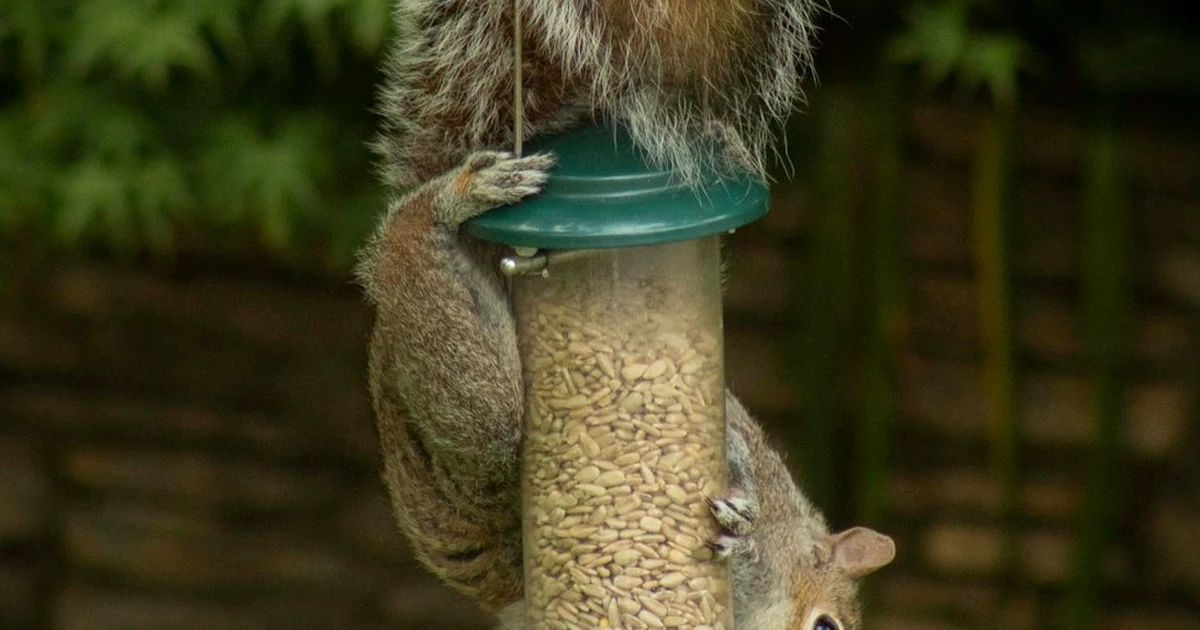
The seed tube is still full at breakfast; by lunch, a squirrel has clung to the fence, launched across the gap and emptied it. The cage looked sturdy, but the nearby fence gave it a shortcut that no amount of chasing could stop.
For a squirrel proof bird diy uk setup, use a 25 mm protective wire-mesh cage, fit a smooth pole baffle, and place the feeder at least 2 m from trees, fences and walls.
Table of Contents
Advertisement
Build a feeder that squirrels cannot raid
Make the cage first, then keep feeder ports beyond a squirrel’s reach.
Gather the parts before cutting
Use 25 mm galvanised welded mesh, not flexible chicken wire, and make the cage about 120 mm wider than the feeder on every side. Buy a 900 mm by 600 mm mesh sheet, a metal seed feeder, cutters, pliers, weatherproof cable ties and a smooth pole; these usually cost £20 to £45 in England if you already have cutters and a pole.
Form a removable mesh cage
Cut panels to suit the feeder, fold every cut edge back by one square, and cable-tie three sides and the base together. Make the fourth side a removable door, then hang the feeder centrally with its ports at least 100 mm behind the mesh.
Small birds enter
Ports stay out of reach
Stops pole climbing
Stops jumping
For a repeatable DIY bird feeder cage, build a fully enclosed 400 mm × 400 mm × 600 mm box around a tube feeder no more than about 180 mm wide. Cut four 400 mm × 600 mm side panels, a 400 mm × 400 mm roof and a 400 mm × 400 mm base from 25 mm welded mesh; this needs roughly a 1.8 m × 0.9 m sheet of galvanised wire mesh cage material, not a small 900 mm × 600 mm panel.
Fold cut edges inward, use stainless-steel or weatherproof cable ties, and make one side a hinged or tie-fastened door. The 25 mm openings admit tits, finches and sparrows, while the 400 mm internal width gives useful feeder port clearance when the feeder hangs centrally.
Stop the jump routes that defeat barriers
Move the station into open space before fitting the baffle.
Check every route from above
Set the feeder cage at least 2 m away from branches, fences, walls, sheds, chairs and washing-line supports, measuring from the cage rather than the pole. Look up as well as sideways: branches can swing closer in wind and give squirrels a route that bypasses every barrier.
Fit a smooth pole baffle
Fit a smooth cone or dome baffle below the cage, roughly 1.2 to 1.5 m above ground, with its widest edge facing down.
Do not grease poles with Vaseline or oil, and avoid chilli powder; physical barriers are safer for wildlife and align with the welfare approach promoted by the RSPB.
Advertisement
Choose and fit the right defences
Match the barrier to the route squirrels use.
Compare the practical options
| Method | Typical UK cost | Works best for | Main limit |
|---|---|---|---|
| 25 mm mesh cage | £8 to £18 | Stopping direct access | Excludes large birds |
| Smooth pole baffle | £10 to £25 | Stopping pole climbing | Fails against jumps |
| Weight-activated feeder | £35 to £70 | A neat ready-made option | Needs careful adjustment |
| Moving the feeder alone | Free | Creating a 2 m gap | Does not stop climbing |
Keep seed dry and the area clean
Fill feeders with sunflower hearts or quality seed for around 3 to 5 days in wet weather, then remove damp food and wash feeders with hot soapy water. Sweep fallen seed twice a week, or daily if rats or mice appear, and use proper holders for suet balls rather than plastic netting. A cage plus baffle is the dependable low-cost option for small birds, but it excludes larger visitors such as magpies, pigeons and starlings.
A suspended line can work where a pole would block a path or patio, but it is not an automatic squirrel deterrent. Run a taut, smooth steel cable between two sturdy supports, hang the feeder from its middle and fit a wide, smooth cone baffle on each side of the hanging point. Keep both supports outside the two metre clear zone and check the full squirrel jump distance from fences, branches and shed roofs; if squirrels still land on the cable, increase the gap towards 3 m where the garden allows.
A cable avoids pole climbing, but it can sag, sway in wind and create a new route if either end is close to a tree or fence.
UK weather changes the routine at a garden bird feeding station. In persistent rain, fit a rain guard or sheltered roof above the feeder, refill little and often, and discard clumped seed before it becomes mouldy. During autumn and winter, offer energy-rich sunflower hearts and fresh suet in a proper holder, checking that suet has not turned rancid or become waterlogged. In warm spells, wash feeders more frequently, rinse away all soap residue and let them dry before refilling.
This is practical wildlife-safe squirrel control as well: clearing husks and fallen seed reduces the reward beneath the feeder without using irritants, grease or sticky substances.
FAQs
How do I stop squirrels getting into a bird feeder?
Use a 25 mm mesh cage, smooth pole baffle and a 2 m gap from trees, fences and walls.
Can squirrels get through 25 mm mesh?
Adult grey squirrels cannot normally pass through welded 25 mm mesh. Keep feeder ports at least 100 mm behind it.
Does a squirrel baffle work on its own?
No. A baffle stops pole climbing but not jumps from fences, branches, sheds or walls.
Is Vaseline safe on a bird feeder pole?
No. Vaseline can contaminate feathers and fur; use a smooth baffle instead.
What bird food attracts fewer squirrels?
No common food reliably deters hungry squirrels. Sunflower hearts reduce mess, but physical barriers remain essential.
Can I use chicken wire for a squirrel cage?
Chicken wire bends easily and can leave sharp ends. Use 25 mm galvanised welded mesh instead.
Why are squirrels still emptying my caged feeder?
They are usually jumping from a nearby structure or reaching through the mesh. Recheck the 2 m clearance and port gap.
Should I stop feeding birds in summer?
You can feed birds in summer if food stays dry and feeders are cleaned regularly. Remove mouldy seed and old suet promptly.
- Use 25 mm welded mesh and keep feeder ports 100 mm inside the cage.
- Place the feeder cage at least 2 m from branches, fences, walls and sheds.
- Fit a smooth pole baffle to stop climbing, not jumping.
- Clean feeders and clear fallen seed to protect garden birds and discourage rodents.
- Bird Flu in UK: Protect Garden Birds and Poultry
- Should You Stop Feeding Garden Birds Seeds This October?

Editorial Team
Our team consists of passionate British birdwatchers and garden wildlife enthusiasts. We provide honest, practical advice on feeding garden birds, choosing the right feeders, and making your outdoor space a haven for UK wildlife — guided by RSPB best practice and real garden experience.
The information on this website is provided for general guidance only. Always follow RSPB and BTO best practice when feeding garden birds. Product recommendations may include affiliate links — see our disclosure policy for details.