A fresh sack of peanuts can be a valuable garden-bird food, but safety depends on freshness, feeder design and season. Choose plain, bird-grade, aflatoxin-tested peanuts; use whole kernels only in mesh feeders and offer kibbled peanuts on clean trays.
Table of Contents
Advertisement
Are peanuts safe for garden birds in England?
Peanuts are safe supplementary food for many garden birds in England when they are unsalted, unflavoured, aflatoxin-tested and served correctly. Their fat and protein are particularly useful in cold weather, but whole kernels should never be scattered on lawns, tables or open trays.
Can young birds choke on whole peanuts?
Young birds can choke on whole peanuts or large pieces if adults carry them from an open feeder to a nest. A mesh peanut feeder lets adult birds remove only small fragments.
Which peanuts are unsafe for wild birds?
Unsafe peanuts include salted, roasted, flavoured, snack-grade, stale or mouldy nuts. Buy food labelled for wild birds, ideally with an aflatoxin-testing claim, batch code and best-before date.
Before buying, use a quick safety checklist rather than relying on price or a generic "peanuts" label. Choose bird-grade peanuts from an identifiable supplier, with a sealed pack, a best-before date and a batch or lot code that can be traced if there is a problem. The label should confirm that they are plain, with no salt, sugar, flavourings or oil: unsalted peanuts for birds are the appropriate choice.
Prefer aflatoxin-tested peanuts, then inspect the contents at home for dust, webbing, insects, clumps, visible mould or an unusually rancid smell. A clear origin statement and a recent packing date are useful extra checks, especially when buying a larger sack.
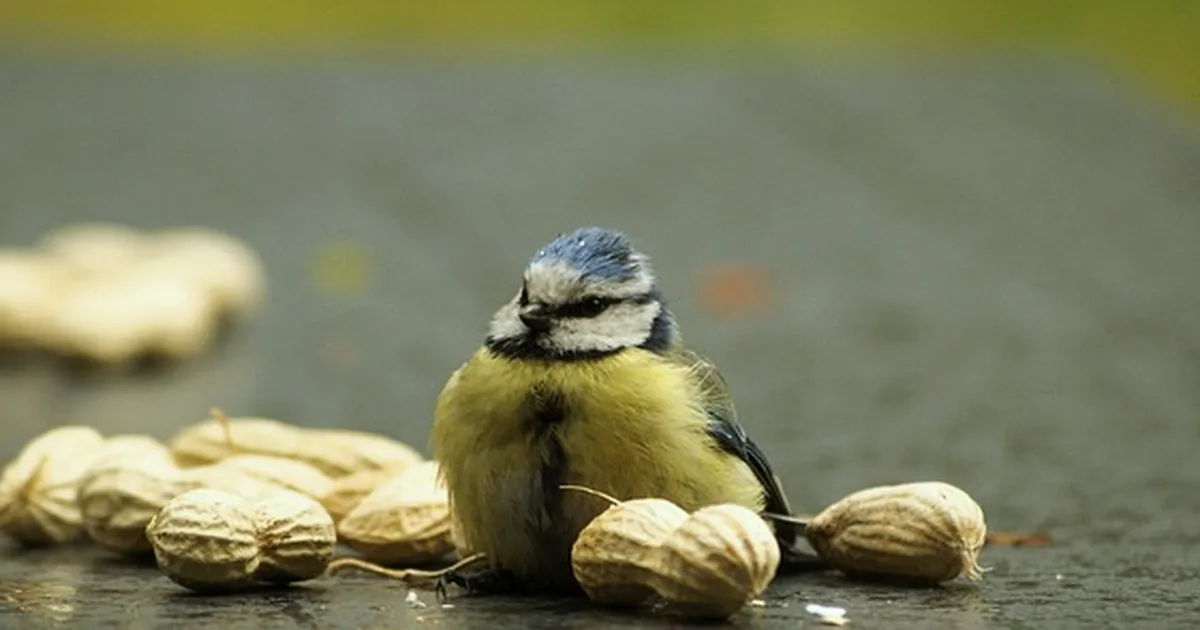
Match peanut format, bird and feeder safely
Match peanut size to the bird and feeder rather than choosing the cheapest bag. Whole kernels belong in mesh feeders; crushed or kibbled peanuts suit robins and other small birds on sheltered trays, with wet leftovers removed promptly.
When should whole peanuts be used?
Whole peanuts are best used in sturdy mesh feeders for clinging birds including tits, nuthatches and woodpeckers.
Are crushed peanuts safer for robins?
Crushed peanuts are safer for robins, dunnocks and wrens because they can pick up manageable pieces. Offer only a day’s portion on a clean, covered tray.
| Peanut format | Suitable birds | Best feeder | Main risk |
|---|---|---|---|
| Whole kernels | Tits, nuthatches, woodpeckers | Mesh peanut feeder | Choking if placed openly |
| Kibbled peanuts | Robins, dunnocks, wrens | Covered clean tray | Spoilage when wet |
| Halved peanuts | Larger birds only | Mesh feeder | Pieces remain too large for chicks |
| Peanuts in shells | Limited garden use | Not recommended | Waste and squirrel access |
Look for plain peanuts sold for wild birds and pair them with a proper mesh feeder. This keeps whole kernels controlled while birds feed.
- Mesh feeding limits each peck to a small peanut fragment
- Bird-grade packs are more likely to state aflatoxin checks and batch details
- A sealed bag helps keep refill peanuts dry between feeding days
Why not put peanuts on the ground?
Ground feeding makes nuts wet quickly and increases contamination from droppings, rats and squirrels. Sweep up fallen food and avoid topping up old, damp kernels.
Peanuts attract more than clinging feeder birds, so match the offering to the visitor. Peanuts for tits, peanuts for nuthatches and peanuts for woodpeckers work best as whole kernels in a mesh feeder, where these birds can chip off small pieces. Jays can also take peanuts, but whole nuts should still remain in a suitable feeder rather than on the lawn. Doves and crows may investigate fallen food, yet they are not a reason to scatter kernels: this increases waste and contamination.
For ground-feeding visitors, a small amount of kibbled food on a cleaned, covered bird feeding tray is the safer option, removed once feeding activity has finished.
Advertisement
Buy only the sack your garden can keep fresh
A bulk sack is good value only if it remains dry, cool and fresh until used. For most English gardens, 5 kg to 12.5 kg is a practical starting size; buy roughly four to eight weeks’ expected use rather than months of food.
Is a 25 kg sack really cheaper?
Bulk peanuts are cheaper per kilogram only when none are lost to dampness, pests or stale flavour.
| Bag size | Typical £/kg range | Best weekly use | Storage decision |
|---|---|---|---|
| 5 kg | £4.00 to £6.00 | Under 500 g | Cupboard or sealed tub |
| 12.5 kg | £3.00 to £4.50 | 500 g to 1 kg | Dry indoor storage |
| 25 kg | £2.40 to £3.60 | 1 kg to 2 kg | Airtight pest-proof bin |
| 50 kg | £2.20 to £3.20 | Over 2 kg | Only with very fast turnover |
How should bird peanuts be stored?
Store peanuts in an airtight, pest-proof container indoors or in a genuinely dry space. Discard food with mould, clumping, insects or a stale oily smell.
Use a breeding-season calendar and clean feeders
Whole peanuts should be avoided whenever young birds could receive or swallow them whole, especially in spring and summer. If feeding during breeding season, use modest kibbled portions, suitable soft foods, clean water and feeders that prevent access to whole kernels.
What should change from May to October?
From May to October, remove whole peanuts if your local welfare policy requires it or fledglings are using the garden. Clear wet food daily.
How often should feeders be cleaned?
Clean peanut feeders weekly and every two to three days during warm, wet weather or heavy use.
Good safe bird feeding also means stopping contamination before it spreads. Empty a tray before adding fresh food rather than pouring new peanuts over old crumbs, and wash hands or use separate brushes after cleaning feeders. Remove wet kibbles, droppings and hull debris daily from covered trays; scrub the feeder with hot, soapy water, rinse thoroughly and allow it to dry before refilling.
If several birds look lethargic, have swollen or crusted eyes, or leave unusually loose droppings around the feeding area, pause feeding there, clean feeders and nearby water containers, and follow current advice from a recognised UK wildlife or animal-health body before putting food out again.
Common questions
Are peanuts good for garden birds?
Peanuts are good supplementary food when unsalted, aflatoxin-tested and served in a suitable feeder.
When should you stop putting peanuts out for birds?
Stop offering whole peanuts when young birds could access them, particularly during spring and summer.
What birds eat peanuts in UK gardens?
Blue tits, great tits, coal tits, nuthatches and woodpeckers commonly eat peanuts from mesh feeders.
Do robins enjoy peanuts?
Robins can enjoy crushed peanuts offered in small, fresh portions.
Can I feed birds supermarket peanuts?
Avoid supermarket peanuts unless they are plain, suitable for wild birds and aflatoxin-tested.
Advertisement
Choose safe peanuts, not just cheap peanuts
Choose bird-grade peanuts your garden can finish before they lose freshness: whole kernels in an appropriate-season mesh feeder, and kibbled portions on a covered tray for smaller birds.
For related feeding choices, see our guides to the best bird feeders for UK gardens and feeding robins safely.
- The essential point: whole peanuts belong in a mesh feeder, never on an open table or lawn.
- For smaller birds: use kibbled peanuts in small, dry portions.
- For value: buy a sack size that will stay fresh for four to eight weeks.
- For welfare: follow your local breeding-season policy and clean feeders regularly.
Related sources
These articles can help you explore the topic in more depth:
- Peanuts Bird Food — bargainbirdfood.co.uk
- Wild Bird Peanuts | 5kg - 50kg — gardenwildlifedirect.co.uk
- Wild Bird Peanuts | Bird Food Peanuts — lovegardenbirds.co.uk
- Which Birds Eat Peanuts & Are Peanuts Good For Birds? — arkwildlife.co.uk

Editorial Team
Our team consists of passionate British birdwatchers and garden wildlife enthusiasts. We provide honest, practical advice on feeding garden birds, choosing the right feeders, and making your outdoor space a haven for UK wildlife — guided by RSPB best practice and real garden experience.
The information on this website is provided for general guidance only. Always follow RSPB and BTO best practice when feeding garden birds. Product recommendations may include affiliate links — see our disclosure policy for details.