The Mirror’s warning about garden bird nests is a useful prompt, but the practical issue is not that every old nest makes a garden untouchable. The key question is whether a nest is being built or is in use. For householders, gardeners, landscapers and property managers, recognising that distinction before cutting a hedge, clearing a shed or repairing a roof can prevent both wildlife harm and a potential legal offence.
In Great Britain, the principal protection comes from the Wildlife and Countryside Act 1981, with related and amended provisions applying across the nations. Broadly, it is illegal to intentionally take, damage or destroy the nest of any wild bird while that nest is in use or being built, or to intentionally take or destroy a wild bird’s egg. Some species receive additional protection. The precise legal position can vary by nation and circumstance, so commercial operators and owners facing a difficult case should seek professional ecological advice rather than relying on a calendar date.
Table of Contents
Advertisement
Why this matters in an ordinary garden
Many nest problems arise not from deliberate cruelty but from routine maintenance. A hedge that is cut every August, a climber stripped from a fence, a shed emptied before repainting, or a fascia board repaired after a leak can all contain a nest that has gone unnoticed.
The misconception is that nesting finishes in spring. Spring is certainly the busiest period for many familiar garden birds, but breeding does not operate to one neat timetable. Woodpigeons can breed in multiple months, blackbirds may attempt later broods, and house sparrows can nest repeatedly where food and suitable cavities are available. Mild weather, food availability and a failed first attempt can all extend activity. A nest discovered in late summer therefore should not automatically be treated as abandoned.
This is particularly relevant in gardens with regular feeding stations. A reliable supply of sunflower hearts, suet and clean water may support local adult birds through the breeding season. That is usually positive, but it can mean birds remain active around the same hedge, ivy-covered wall or nest box for longer than a gardener expects.
The legal principle: active nests, eggs and protected species
What is normally protected
For common garden birds, the core protection concerns a nest while it is being built or in use, together with eggs. “In use” includes more than the brief period when a parent is sitting visibly on it. A nest containing eggs, chicks or dependent young is plainly active; a nest under construction is protected too. A bird temporarily away feeding does not make its nest free to remove.
An old, clearly abandoned nest of a common species is not generally protected indefinitely merely because it remains in a shrub or roof void. However, that does not mean removal is always sensible. It may be hard to establish whether the nest is genuinely inactive, and some birds return to the same site for another brood.
When extra protection applies
Certain species listed on Schedule 1 receive stronger protection, including protection from intentional or reckless disturbance at, on or near an active nest. These are not the species most people encounter daily at feeders, but owls, kingfishers and birds of prey may use buildings, mature trees or nearby land. Barn owls, for example, may occupy farm buildings, outbuildings and occasionally structures associated with larger gardens.
If there is any possibility that a protected species is present, stop work and consult the relevant statutory nature body or a suitably qualified ecologist. Do not investigate an occupied nest closely in an attempt to identify it: repeated checking can itself cause disturbance.
Advertisement
What to do before cutting, clearing or repairing
The most useful response is a simple pre-work check, followed by a decision to delay where needed. This applies equally to a homeowner with secateurs and a contractor with a hedge trimmer.
1. Check from a distance
Watch the area quietly for several minutes at different times of day. Look for adults repeatedly carrying twigs, insects or caterpillars into one point; birds leaving the same dense patch; or alarm calls focused on a particular shrub, eave or cavity. Avoid pulling apart foliage or putting your hand into holes, nest boxes and roof spaces.
2. Postpone non-essential work
If nesting activity is suspected, delay hedge cutting, pruning, demolition, roof work or clearance in that immediate area. Mark the location so that family members, gardeners and contractors know it is excluded. In most gardens, a short delay is far less disruptive than destroying a nest or abandoning chicks.
For annual hedge management, scheduling substantial cuts outside the main nesting period is sensible, but it is not a substitute for checking. A commonly used precautionary window is March to August, yet active nests can occur outside it.
3. Change the scope of the job
Where work cannot wait, consider whether it can be narrowed. Could a repair be accessed from another side? Can only the unsafe branch be dealt with, leaving the occupied section untouched? Can a contractor return once the young have fledged? A professional should document the check and the agreed exclusion zone.
4. Act quickly only for genuine safety emergencies
A dangerous branch, fire risk or urgent structural failure may need immediate action. Even then, use the least damaging method possible and obtain advice where practical. “It was inconvenient to wait” is not the same as an emergency.
Feeders and nest boxes: helpful, but not a licence to interfere
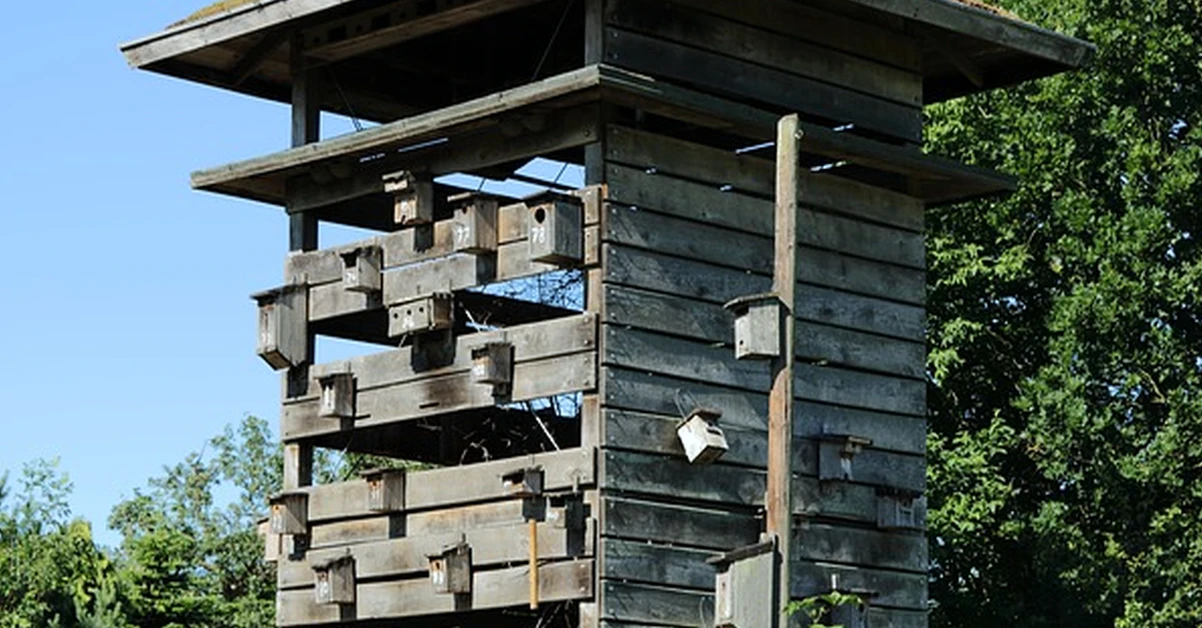
Bird feeding does not make a nest yours, and installing a nest box does not entitle the owner to open it during breeding. Once birds are investigating, building in or using a box, leave it alone. Do not clean it, move it or try to photograph the contents.
Good feeder hygiene still matters. Clean feeders regularly, clear heavily soiled waste from beneath them and provide fresh water. If disease is suspected—such as several sick or dead finches at one feeding point—temporarily stop feeding at that location and clean equipment thoroughly. This protects the adult birds that may be feeding nestlings nearby.
Avoid placing feeders directly beside a dense nesting shrub if the site concentrates predators or creates constant disturbance. A little distance, cover nearby rather than immediately around the feeding point, and more than one escape route can make a garden safer for small birds.
A practical policy for gardeners and professionals
The real lesson from the report is that wildlife checks should become part of routine garden maintenance, not an afterthought. Keep a brief record of nest activity, tell contractors about known nest sites before work starts, and build flexibility into seasonal schedules. For landscaping businesses, a written nesting-bird check in the risk assessment is a practical safeguard for staff, clients and wildlife.
Where a nest is active, the best action is usually the least dramatic one: stop, protect the area and return later. That approach meets the purpose of the law while allowing gardens to remain functional places for people, pets and wildlife.
Advertisement
FAQ
Can I cut my hedge in August if I cannot see a nest?
Possibly, but check carefully first. August is outside the peak nesting period for some species, not a guarantee that nesting has ended. If birds are entering a particular section repeatedly or carrying food or nesting material, postpone work there.
Can I remove an empty nest from my shed or porch?
An old nest of a common species may generally be removed once it is clearly no longer being built or used. Be cautious: birds can begin another brood, and a nest that looks empty from outside may not be inactive. Do not remove eggs, and seek advice if the species or status is uncertain.
Does an occupied nest box have the same protection as a natural nest?
Yes. A nest in a box is still a wild bird’s nest. Do not open, move or clean the box while birds are building, incubating or rearing young.
What should I do if a nest is blocking urgent building work?
Pause work around the nest and seek advice from an ecologist or the relevant nature conservation body, especially if the species may have enhanced protection. Explore alternative access, temporary protection or a delayed work schedule before considering any intervention.
Source: The Mirror — Fri, 21 Aug 2026 12:35:00 GMT

Editorial Team
Our team consists of passionate British birdwatchers and garden wildlife enthusiasts. We provide honest, practical advice on feeding garden birds, choosing the right feeders, and making your outdoor space a haven for UK wildlife — guided by RSPB best practice and real garden experience.
The information on this website is provided for general guidance only. Always follow RSPB and BTO best practice when feeding garden birds. Product recommendations may include affiliate links — see our disclosure policy for details.