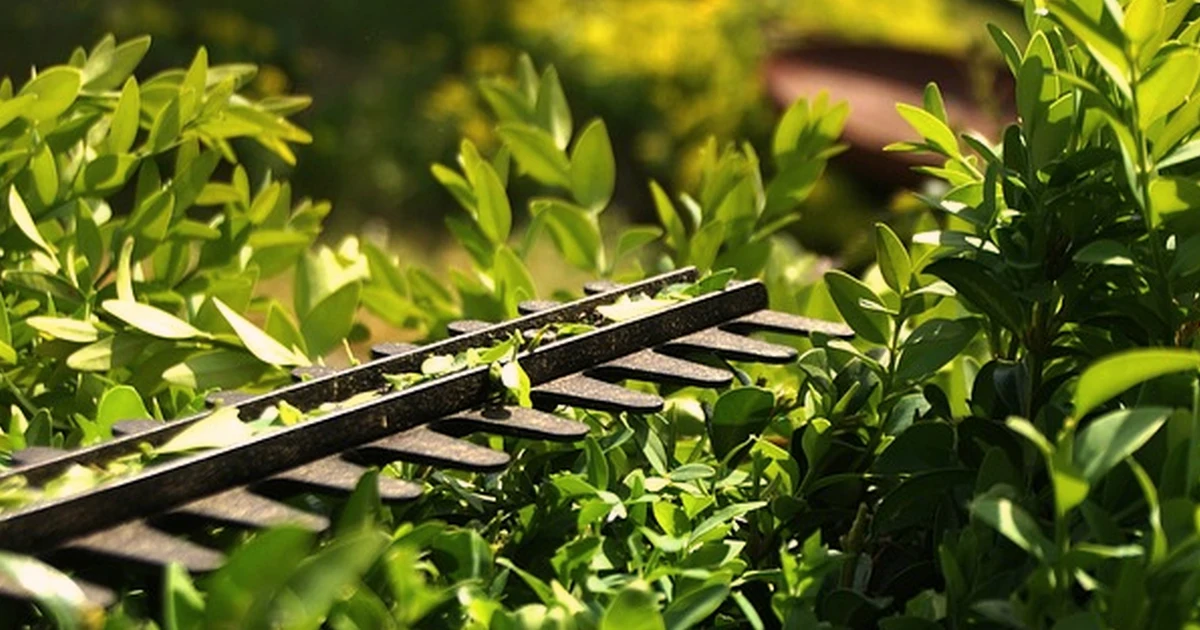
September is often treated as the moment when hedge maintenance can finally begin: summer growth has become untidy, paths are narrowing and shrubs may be shading feeders. However, the warning highlighted by Ideal Home is more than a reminder to inspect a hedge before starting the trimmer. For anyone who feeds or watches birds in a UK garden, it is a prompt to recognise that a hedge is not merely a boundary or a landscaping feature. It is nesting cover, a route between food sources, a refuge from predators and, in many gardens, the structure that makes a feeding station usable for small birds.
The vital check is for active nests before pruning, reducing or removing a hedge. A hedge can look quiet from the outside while holding a nest deep within ivy, bramble, privet, beech, hawthorn or dense conifer. Cutting through, disturbing or blocking access to an active nest can harm birds directly and may breach wildlife legislation.
Table of Contents
Advertisement
Why September hedge cutting still needs care
The broad advice to avoid hedge cutting during the main bird breeding season is sensible, but it can lead to an unhelpful assumption: that every nest will be empty by the start of September. In reality, birds do not all follow one fixed calendar.
Many familiar garden species begin breeding in spring, yet late broods are possible. Woodpigeons are particularly well known for nesting across a long season. Dunnocks, blackbirds, robins and wrens may also raise later broods when weather and food availability allow. Warm late summers, sheltered urban gardens and reliable supplies of food can extend breeding activity. A nest may contain eggs, chicks or dependent young even when the surrounding hedge has started to look autumnal.
This matters especially in gardens where feeders are used consistently. Sunflower hearts, peanuts in appropriate mesh feeders, suet and mealworms can improve the local food supply for adult birds. Feeding is valuable, but it does not make a hedge dispensable. Nestlings need safe cover and adults need a protected approach to food. Removing or heavily thinning that cover can expose a nest to cats, corvids and poor weather, even if the cutting does not physically strike it.
What UK law protects
Under the Wildlife and Countryside Act 1981, it is an offence in England, Scotland and Wales to intentionally take, damage or destroy the nest of any wild bird while it is in use or being built. It is also an offence to take or destroy wild bird eggs. Northern Ireland has separate but broadly similar protections under the Wildlife (Northern Ireland) Order 1985.
The key point for householders and contractors is that the law is concerned with the status of the nest, rather than a convenient date in the gardening calendar. There is no automatic legal clearance simply because it is September. Checking diligently before work begins is therefore an essential part of responsible maintenance.
Some species have additional protection, including certain Schedule 1 birds. These protections can cover disturbance at or near an active nest. Such species are unlikely in every suburban hedge, but the principle remains important: if a nest is found, stop work and seek informed advice rather than trying to identify the species by guesswork while holding hedge trimmers.
Advertisement
A hedge is part of the bird-feeding system
Cover makes feeders safer
Bird feeders work best when birds can assess risk and retreat quickly. Small species such as blue tits, great tits, coal tits, house sparrows and goldfinches often use nearby shrubs and hedges as staging points before visiting a feeder. A completely open feeding area can feel unsafe, particularly where cats patrol, sparrowhawks hunt or people frequently pass close by.
That does not mean placing a feeder inside thick vegetation. Feeders need enough open space to reduce ambush opportunities for cats and to allow birds a clear escape route. The practical balance is to position a feeder a short flight from dense cover, rather than immediately beside it or far out in an exposed lawn. A hedge cut back too hard can remove that balance overnight.
Hedges provide natural food as well as shelter
Native or wildlife-friendly hedges can supply berries, seeds and invertebrates beyond the period when ornamental flowers are in bloom. Hawthorn, blackthorn, holly, dog rose, elder, hazel and ivy all have roles in a productive garden habitat. Their value is not identical, and berries should not be treated as a substitute for varied planting, but a mixed hedge supports a much broader food web than a tightly clipped, single-species boundary.
For insect-eating birds, hedge foliage and the leaf litter below it can be as important as berries. Wrens, dunnocks and robins forage among stems, soil and fallen leaves. Chiffchaffs and tits search foliage for small insects and spiders. Severe annual cutting reduces flowering and fruiting potential and can simplify the hedge’s structure, leaving less food and fewer sheltered foraging places.
How to carry out a proper pre-cut check
Inspect slowly, not from the patio
Do not rely on a quick glance at the hedge face. Walk its full length and inspect both sides where access is possible. Look for repeated flights to one point, adults carrying food, birds giving alarm calls, fresh nesting material, or a bird slipping into an unusually dense patch of growth.
Pause quietly for several minutes in different places. Birds feeding young may not approach while a person is standing close to the hedge. Early morning or a calm, dry part of the day often makes activity easier to notice. Avoid repeatedly poking, pulling apart branches or pushing a phone into foliage to obtain a photograph: an inspection should not itself become disturbance.
If you see a nest, eggs, chicks, or adults clearly using a location, do not cut that section. Mark the area at a respectful distance and leave a generous buffer around it. Continue only where you can do so without affecting the nest or its approach route. If there is any uncertainty, postpone the entire job. A slightly untidy hedge is a minor inconvenience; disrupting breeding birds is not.
Check again immediately before starting
A check made several days earlier is not enough if cutting has been delayed. Birds can begin nest construction quickly, particularly in dense evergreen or ivy-covered hedges. Contractors should also inspect on the day of work and should be empowered to stop if they find evidence of nesting.
For larger reductions, hedge removal, or work involving machinery, plan the task outside the core nesting period wherever possible. This is usually the simplest and lowest-risk option. It also gives gardeners time to decide whether removal is genuinely necessary or whether a lighter, phased cut would retain more habitat.
Better hedge management for birds and neighbours
A bird-friendly hedge does not have to become an unmanaged one. The most useful change is to move away from the assumption that every hedge needs a hard, uniform annual cut.
Use a light trim where possible, retaining flowering and fruiting wood. Consider cutting one side in one year and the other side later, provided this does not create a neighbour dispute or safety issue. Leave a small section uncut or less formally managed if space permits. This creates variation in height and density, which benefits wildlife and makes nests less conspicuous.
Avoid cutting back into old wood on conifers unless you are certain the species will regenerate; many will not. For deciduous hedges, aim for a tapered profile that is wider at the base than the top. This allows light to reach lower branches, keeping the hedge dense near the ground where many birds shelter and forage.
Once work is complete, inspect feeders and bird tables too. Hedge trimming creates dust, leaf fragments and possibly disturbed insects around a feeding area. Clean feeder ports and perches if they have become dirty, remove spoiled food from trays, and keep ground feeding modest if rats or visiting cats are a concern. Retaining cover should be paired with sensible hygiene, not with allowing old food to accumulate.
Advertisement
When safety work cannot wait
There are legitimate situations where immediate action is needed: branches may obstruct a pavement, reduce sightlines at a driveway, interfere with a public path or pose a risk after storm damage. Even then, the response should be proportionate. Restrict work to the hazardous section, avoid unnecessary removal of adjacent vegetation, and check thoroughly for nesting activity first.
If an active nest is likely to be affected, stop and obtain advice from an appropriate wildlife organisation, local authority service or qualified ecologist, depending on the scale and urgency of the work. Do not attempt to move the nest yourself. Relocation rarely solves the problem because adult birds may not continue caring for eggs or young after disturbance.
The practical takeaway for garden bird lovers
The September message is not that hedge cutting is forbidden. It is that calendar-based gardening must give way to observation. Before switching on a trimmer, assess whether the hedge is currently serving birds as a nursery, a food source or a vital protected route to feeders.
In a well-run bird-friendly garden, feeding, planting and maintenance reinforce one another. Keep feeders clean and safely positioned; retain nearby escape cover; prune gently where possible; and delay work whenever nesting evidence is present. That approach protects birds, reduces legal risk and produces a garden that supports wildlife beyond the few minutes each day when birds visit a feeder.
FAQ
Can I cut my hedge in September in the UK?
Yes, but only after checking carefully for active bird nests. September is outside the peak nesting period for many species, not a guarantee that nesting has ended. If a nest is in use or being built, do not cut or disturb that area.
What should I do if I find a bird nest while trimming?
Stop work immediately and leave a generous undisturbed area around the nest and its access route. Do not touch, move or try to photograph the nest closely. Resume only when you are confident it is no longer active, or seek advice if the situation is unclear.
Is it illegal to remove an empty bird nest from a hedge?
The strongest legal protection applies while a nest is being built or is in use. However, it is often difficult to establish this with certainty, and some species have extra protections. The safest approach is to avoid removing nests during the breeding season and to seek expert guidance if you are unsure.
Where should I place bird feeders after cutting back a hedge?
Place feeders near, but not within, cover: birds need a quick route to shelter without giving cats a concealed launch point. A short flight from a hedge or shrub is generally better than an exposed position in the middle of a lawn or directly against dense foliage.
Source: Ideal Home — Sun, 30 Aug 2026 11:00:00 GMT

Editorial Team
Our team consists of passionate British birdwatchers and garden wildlife enthusiasts. We provide honest, practical advice on feeding garden birds, choosing the right feeders, and making your outdoor space a haven for UK wildlife — guided by RSPB best practice and real garden experience.
The information on this website is provided for general guidance only. Always follow RSPB and BTO best practice when feeding garden birds. Product recommendations may include affiliate links — see our disclosure policy for details.