A bird bath with a fountain adds movement and gentle sound, but floating solar models often fail when fences, sheds or trees shade the bowl. Separate-panel solar pumps or low-voltage mains pumps provide steadier water where sun is limited.
Table of Contents
Advertisement
Choose a fountain that will run in your garden
For shaded gardens, choose an external-panel solar or low-voltage mains pump instead of a floating unit.
Floating solar pumps need direct sun
Floating solar pumps need direct light on their built-in panels, so a bowl under trees, beside fences or in a north-facing garden may stop whenever cloud or shade passes.
External solar panels give more choice
Place an external panel on sunny paving, a shed roof or fence, while the bath remains near cover. Low flow is usually more useful than a dramatic jet.
Mains pumps suit reliable daily flow
A mains-powered water feature is the practical choice for sheltered, shaded gardens where you want circulation every day, including dull periods. Use suitable outdoor equipment and a protected supply.
| Pump type | Typical UK price | Shade performance | Best bowl size | Best use |
|---|---|---|---|---|
| Floating solar | £15 to £30 | Poor without direct sun | 45 cm or wider | Open, south-facing spot |
| External solar panel | £30 to £70 | Good if panel is sunny | 35 cm or wider | Shaded bath, sunny panel site |
| Low-voltage mains pump | £45 to £120 | Reliable | 30 cm or wider | Daily all-season circulation |
Look for a low-flow pump with adjustable nozzles rather than buying by spray height alone. A gentle bubbler is easier to keep inside a bird bath and less likely to unsettle small birds.
- Adjustable flow helps prevent a small bowl from emptying over the rim.
- Separate solar panels can sit in sun while the bathing area stays near cover.
- Low-profile nozzles keep the water sound soft for robins, tits and wrens.
For a practical bird bath circulation setup, compare flow as well as the power source. A small 1.5–3 W floating solar pump may run only in direct sunlight and can lose most of its output when clouds pass, whereas an external solar panel can keep a low-flow pump running when the bowl sits in a shaded garden. Battery-backed solar kits can bridge short dull spells, but their autonomy varies with battery capacity and the previous day’s sunshine.
For a shallow bird bath, start with the lowest setting and a gentle water flow. Roughly 100–200 litres per hour is often enough for a bubbler or short spray, while higher output can empty a small bowl surprisingly quickly.
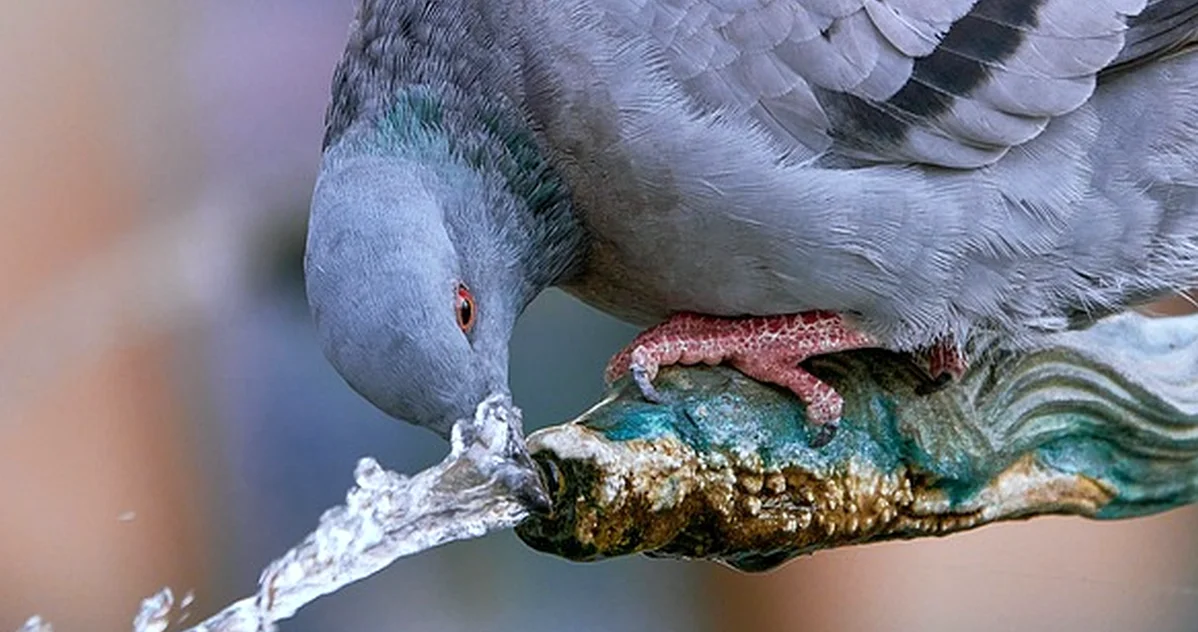
Make the bath safe before choosing the spray
A fountain is safe only when the bowl gives birds shallow water, grip and an easy exit.
Build in shallow standing space
Keep usable edges 2.5 to 5 cm deep. In deeper bowls, stable stones, gravel or a sloping insert must create broad shallow margins.
Use grip, not smooth decoration
Avoid smooth glazed surfaces. Firm river stones, a rough tile or a purpose-made ramp provide footing, provided every piece stays stable.
Keep the spray low and quiet
Use a quiet, low trickle, and place the bath near cover but away from dense shrubs where cats hide. Keep feeders separate to limit droppings.
Advertisement
Convert and maintain a bath for English weather
A low-flow recirculating pump can convert an existing bath, provided the returning spray stays inside the bowl.
Fit the pump without creating hazards
Keep cables safe from trips and sharp edges; use outdoor-rated equipment and an RCD-protected supply for mains models.
Clean for leaves, algae and frost
Empty and scrub weekly with plain water; never use bleach or detergent. Clear leaves promptly, descale removable parts with diluted vinegar and protect pumps from hard frost.
To turn an existing bath into a solar water feature, you need a low-flow pump, adjustable nozzles or a bubbler head, a small length of tubing if required, a pump guard and stable stones or a pump platform. Set the pump on a flat raised support so it does not draw in grit, then test the spray with the bowl filled to its normal level. Trim the flow before choosing a taller nozzle, because the common mistake is selecting a jet that throws water over the rim.
Route an external solar panel cable behind the pedestal or along a protected edge, leaving no loose loop where people, pets or wildlife can snag it. With a low-voltage mains pump, keep every connection dry and use an outdoor protected supply.
In a small garden or on a balcony, a compact shallow bird bath with a low-profile bubbler is usually safer than a tall fountain head, especially where wind can carry spray away. Secure the bowl so it cannot tip, check that overspray will not affect neighbours below, and top up water more often during warm weather. For small species, maintain a safe bathing depth of 2.5–5 cm around the edge and provide secure footing with rough stone, gravel held in place, or a stable ramp.
In autumn, use a simple leaf guard around the pump intake; before hard frost, remove and drain solar pumps, tubing and external panels where the manufacturer advises, then store the pump indoors to reduce frost damage.
Common questions
Do solar bird bath fountains work in shade?
Floating solar fountains do not work reliably in shade because their panel needs direct sunlight. An external solar panel can work if it reaches a sunny area, while the bath remains shaded.
How deep should a bird bath be for small birds?
Small birds need shallow standing areas around 2.5 to 5 cm deep. Add stones or a rough ramp where a bowl is deeper or has smooth sides.
Is a fountain spray likely to scare birds away?
A low, steady trickle is usually less alarming than a high, noisy jet. Keep spray below about 10 cm in a small bowl and prevent water splashing over the edge.
Can I put a fountain in a metal bird bath?
Yes, a metal bird bath can hold a low-flow bubbler if it is stable and shallow. Check water temperature in full sun, as metal warms faster than stone or ceramic.
How often should I clean a fountain bird bath?
Clean the bowl and pump intake at least once each week. Clean sooner if droppings, algae, leaves or cloudy water appear.
Does a mains-powered pump cost much to run?
A small low-voltage pump usually uses far less power than large garden water features. Check the wattage label, then use a timer if constant movement is not needed overnight.
- Choose a separate solar panel or mains pump if shade covers the bath for much of the day.
- Give birds shallow 2.5 to 5 cm edges, firm grip and a quiet low spray.
- Set the pump low enough that water returns to the bowl rather than soaking the garden.
- Clean weekly, [remove](https://gardenbirdsguide.co.uk/don-t-remove-garden-feeders-when-a-sparrowhawk-visits/) leaf debris, and protect pumps from frost and hard-water scale.
Further reading
If you want to learn more about this topic, these sources may interest you:
- Modern Bird Baths | GardenBird — gardenbird.co.uk
- Solar Powered Bird Baths & Fountains — gardenbird.co.uk

Editorial Team
Our team consists of passionate British birdwatchers and garden wildlife enthusiasts. We provide honest, practical advice on feeding garden birds, choosing the right feeders, and making your outdoor space a haven for UK wildlife — guided by RSPB best practice and real garden experience.
The information on this website is provided for general guidance only. Always follow RSPB and BTO best practice when feeding garden birds. Product recommendations may include affiliate links — see our disclosure policy for details.