A scatter of feathers beneath the feeder and a vanished flock can be upsetting, especially when familiar garden birds are involved.
A sparrowhawk visit is usually a normal sign of a healthy local food web, not a reason to stop feeding birds.
Table of Contents
Advertisement
Identify a sparrowhawk before changing feeders
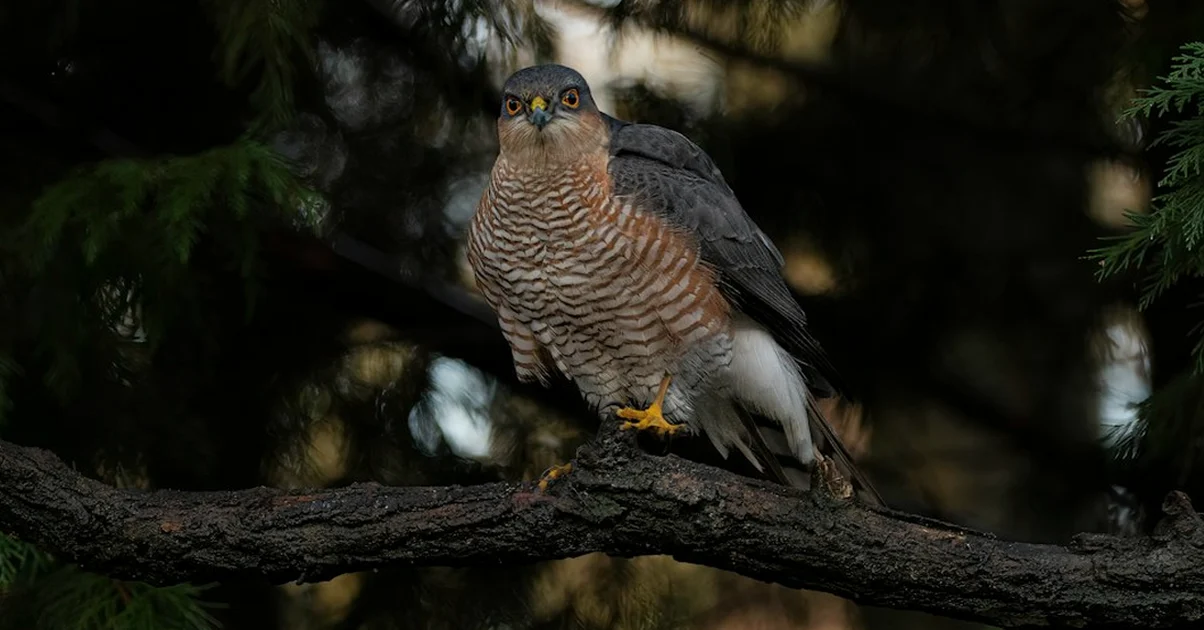
A Eurasian sparrowhawk, Accipiter nisus, has short rounded wings, a long barred tail and a fast flap-and-glide flight that often stays low over fences.
Male, female or juvenile?
| Bird | Plumage clue | Typical garden cue | Likely prey |
|---|---|---|---|
| Adult male | Grey back, orange barring | Small, quick silhouette | Finches and tits |
| Adult female | Brown-grey back, pale barred breast | Broad wings, heavier body | Songbirds to doves |
| Juvenile | Brown with vertical streaks | Often less tidy-looking | Small to medium birds |
Could it be a goshawk or cuckoo?
For a quick garden checklist, look first at shape and behaviour. A sparrowhawk has rounded wings, a long barred tail and usually makes a low, purposeful dash between fences or trees. A goshawk is much larger and bulkier, with broader wings, a stronger head profile and a more powerful, less delicate appearance; it is also far less likely to be the regular small raptor in a built-up garden. A cuckoo can resemble a hawk at a glance, but it has longer, narrower-looking wings, a slimmer body and often flies more openly.
When identifying sparrowhawks at close range, females show brown-grey upperparts and horizontal barring below, males are smaller with orange barring, and juveniles are browner with streaked underparts.
Keep feeding after one normal attack
One kill near a feeder does not mean your bird feeding has become unsafe.
Bird feeders gather prey in one visible place, and a sparrowhawk may use this opportunity during colder spells or when parents are feeding young.
A feeder with a wider, less crowded feeding area can help spread birds across your garden. It cannot make a garden predator-proof, but it can reduce one tight gathering point.
- Helps separate feeding positions instead of concentrating birds on one small tray
- Allows several smaller birds to leave from different sides during a sudden approach
- Makes it easier to move one food source while cleaning a contaminated feeder
A feeder attack can look dramatic, but it is not reliable evidence that sparrowhawks are reducing the local bird population. Like other predators, they often catch individuals that are slower, distracted, inexperienced, injured or otherwise vulnerable, although any individual bird may be taken. The Eurasian sparrowhawk is part of a healthy food web, and its garden bird prey may include finches, tits, sparrows and occasionally larger birds.
Continue garden bird feeding sensibly, while avoiding a feeding layout that creates one crowded, predictable gathering. Watching the wider pattern—regular bird numbers, successful fledglings and use of dense shrubs for refuge—gives a more useful picture than judging the garden from one kill.
After an attack, keep children and pets away from feathers or remains, and do not handle them with bare hands. If you need to clear a path or feeding area, wear disposable gloves, use a bag or scoop, place the material in a sealed household-waste bag, then wash your hands thoroughly. Clean any soiled feeder, tray or bird table with hot soapy water, rinse it and allow it to dry before refilling; remove old seed from the ground as well.
This is basic hygiene rather than a response to the sparrowhawk itself: feathers can also come from cats, collisions or natural moulting, and prompt cleaning helps limit disease risks where garden bird feeders attract many birds.
Advertisement
Change the layout if attacks repeat
Repeated hunting means the same perch, time window or feeder cluster is being used again and again.
Put space between food and cover
Start by moving one or two feeders, leaving a clear gap of around 1 to 2 metres from dense shrubs, fence corners or trellis used as concealed perches. Keep escape cover a short flight away, often around 2 to 5 metres from food.
Spread food rather than crowding it
Protect birds lawfully after repeated visits
Sparrowhawks are protected wild birds in England under the Wildlife and Countryside Act 1981, so catching, poisoning, injuring or deliberately killing one is unlawful.
Netting over an open garden, poison and homemade traps can injure protected wildlife, pets and non-target birds. A grounded, tangled or unable-to-fly raptor needs help from a licensed wildlife rehabilitator or the RSPCA.
Know when this advice does not fit
Common questions
Is a sparrowhawk in my garden dangerous?
A sparrowhawk is not dangerous to people, but it can catch small birds near a feeder. Keep pets indoors if they are very small, and never try to handle the raptor.
How do I stop sparrowhawks killing garden birds?
Spread feeders, remove a hidden perch beside them and retain escape cover 2 to 5 metres away. This reduces predictable ambushes but cannot, and should not, remove all natural predation.
Should I stop feeding birds after a sparrowhawk attack?
No, one attack is not a reason to stop feeding birds. Clean the area, then observe for 7 days before moving crowded food points if attacks repeat.
Why does a sparrowhawk keep coming back to my garden?
A sparrowhawk may return if it finds prey gathering at the same place and time. Repeated attacks from one perch suggest that spreading feeders is more useful than removing all food.
Where do sparrowhawks nest in England?
Sparrowhawks usually nest in woodland, plantations or dense copses rather than exposed gardens. They may hunt in suburban gardens several kilometres from their nest during the breeding season.
Advertisement
A calmer plan for your garden
- One attack is normal: clean the feeding area and watch before changing anything.
- Repeated ambushes need layout changes: spread food and remove cover immediately beside one feeder.
- Keep refuge available: nearby shrubs help small birds escape when they are not acting as a hidden launch perch.
- Protect wildlife lawfully: never trap, poison, injure or feed a sparrowhawk.
The aim is not a predator-free garden, but one where smaller birds have food, cover and more than one way out.
Related sources
These articles can help you explore the topic in more depth:
- Understanding Sparrowhawks — foodforbirds.co.uk
- Sparrow Hawk — hawkandowltrust.org
- How can I deter a sparrowhawk from using my garden as ... — reddit.com
- Sparrowhawk — bto.org

Editorial Team
Our team consists of passionate British birdwatchers and garden wildlife enthusiasts. We provide honest, practical advice on feeding garden birds, choosing the right feeders, and making your outdoor space a haven for UK wildlife — guided by RSPB best practice and real garden experience.
The information on this website is provided for general guidance only. Always follow RSPB and BTO best practice when feeding garden birds. Product recommendations may include affiliate links — see our disclosure policy for details.