A lone young blackbird on the lawn can look abandoned, but feeding it is often the kindest-looking mistake to avoid: fledglings commonly leave the nest before they fly well while parents continue feeding them nearby.
Table of Contents
Advertisement
Blackbird garden ID and the English year
A male blackbird is black with an orange-yellow bill and eye-ring, while females and young birds are brown.
Female and juvenile blackbird clues
A female blackbird is dark brown rather than black, while a juvenile is more mottled and may still show yellow at the gape, the fleshy corners of the mouth.
In England, nesting often starts from March and can continue into August; young commonly leave the nest around 12 to 16 days after hatching, before flying well.
Do blackbirds migrate in the UK?
Many English blackbirds remain near their breeding area all year, although winter can bring birds from continental Europe.
The blackbird’s rich, fluting song is one of the clearest signs that a male is holding a breeding territory in a garden. Listen from a rooftop, tree top or aerial around dawn and again towards dusk, particularly from late winter through early summer. A male may sing from the same exposed perch for several days, whereas a female blackbird is usually quieter and spends more time foraging under shrubs or along lawn edges.
Watch from indoors or at a distance during the blackbird nesting season: repeated flights carrying worms, caterpillars or other soft food into dense cover can indicate a nest nearby, but should not be followed closely.
A blackbird garden changes through the year. Singing often becomes more noticeable from February, nest building and egg laying follow in spring, and a young blackbird or blackbird fledgling is most likely to be seen on the ground from late spring into summer. Pairs can attempt more than one brood, so adult activity around cover may continue well into August. In late summer, adults may become less visible while moulting, when they can look untidy and may spend more time hidden in vegetation.
Autumn and winter bring more lawn feeding, berry eating and visits to water, especially after frost makes soil invertebrates harder to reach.
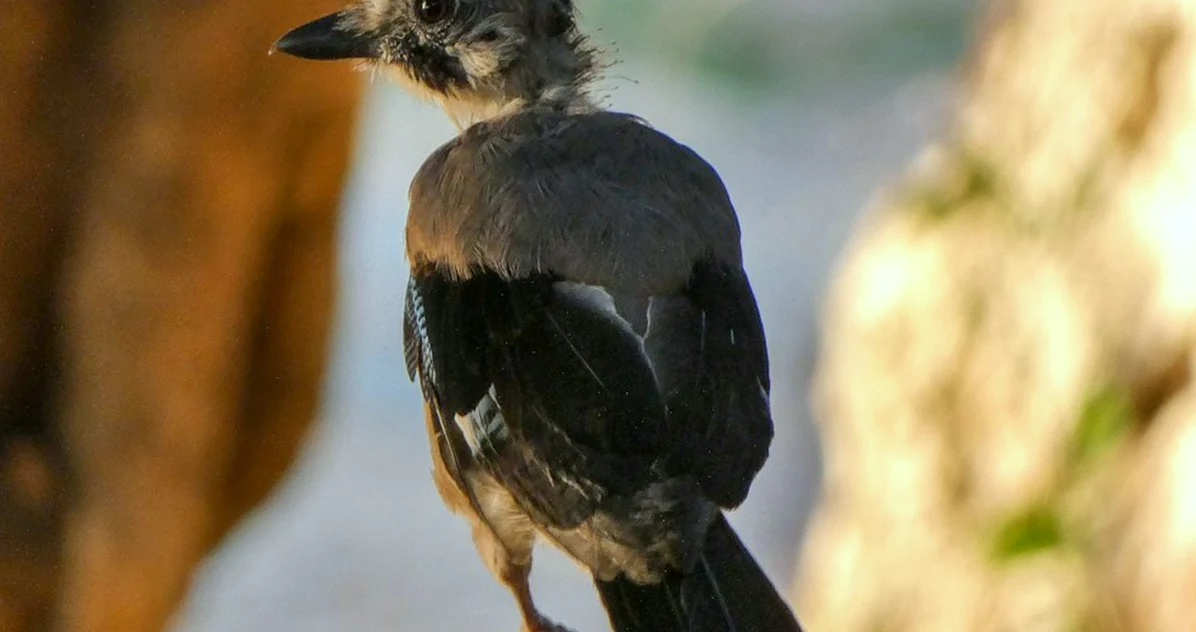
A fledgling on the ground usually needs space
A fully feathered blackbird fledgling should usually be left near where you found it because its parents may feed it for between 2 and 3 weeks after it leaves the nest.
Leave it, move it, or seek help?
Leave an alert, feathered, upright fledgling alone and watch from indoors; move it only a few metres beneath a shrub or onto a low branch if it faces immediate danger.
Food is not first aid
Do not give bread, milk, dry seed or water from a syringe to a fledgling, as inappropriate food or forced fluid can cause serious harm.
Advertisement
Feed blackbirds without replacing wild food
Blackbirds do best where they can hunt natural food in lawn edges, borders and leaf litter, with clean water and only small amounts of supplementary food.
Food that suits a ground-feeding blackbird
Offer a small handful of soaked raisins, chopped apple or pear, mealworms, or soft bird food on a clean tray, and remove anything left within a day.
Choosing a tray for an English garden
A low feeding tray or bird table suits blackbirds better than a narrow tube feeder; easy cleaning matters more than a complicated design.
| Feeding option | Typical England price | Best food | Cleaning need |
|---|---|---|---|
| Ground feeding tray | £8 to £15 | Fruit, soaked mealworms | Wash daily after soft food |
| Bird table | £25 to £60 | Soft food, sunflower hearts | Brush and wash weekly |
| Hanging feeder | £10 to £30 | Mostly seed for other species | Clean weekly |
A washable ground-feeding tray helps keep soft food off wet paving and makes daily clearing straightforward. Choose one with low sides so a blackbird can step on and off easily.
- Gives blackbirds a stable, ground-level place to take fruit and soaked mealworms
- Lets you remove leftovers before they spoil or attract rodents
- Allows quick washing if droppings build up after rain
Water, leaves and safe cover
A shallow dish, rinsed and refilled daily, plus leaf litter beneath shrubs, gives blackbirds drinking, bathing and invertebrate-hunting opportunities.
Nests and missing birds need less intervention
Do not remove or disturb an active blackbird nest, and check hedges before cutting during nesting season.
A blackbird may disappear for days because natural food, weather, moult, predators or dense summer cover have changed its routine.
Protect nests without creating traps
Avoid pruning dense hedges from March to August unless you have checked carefully for active nests, and keep cats indoors at dawn and dusk when fledglings are present.
Most blackbirds seen in many English gardens are resident birds that remain close to their breeding territory, but winter numbers can be increased by migrants from continental Europe. This is especially noticeable in eastern and southern parts of the UK, where birds arriving across the North Sea may join local populations. Females and juvenile blackbirds are often more likely than adult males to move longer distances, so a rise in brown birds at a feeding area in autumn does not necessarily mean the local male has disappeared.
For feeding garden blackbirds, keep water clean and offer only modest fresh food; if several birds look fluffed up, weak or unusually tame, stop feeding temporarily, clean the area and seek RSPCA bird advice or advice from a local wildlife rehabilitator.
What people ask
What does a baby blackbird look like?
A fully feathered fledgling is usually brown, mottled and short-tailed, while a nestling has bare skin or sparse down.
Should I feed a blackbird fledgling in my garden?
No. Parents usually feed healthy fledglings for two to three weeks, so remove hazards and observe from a distance.
When do blackbirds return to gardens in the UK?
Many blackbirds remain in UK gardens all year, although winter visitors from Europe can change the birds you see.
Where have all the garden birds gone today?
Birds may disappear because of weather, predators, moult or natural food nearby; a quiet feeder is not proof of illness.
Advertisement
A calm plan for your garden blackbirds
A good garden for blackbirds is a place where birds can drink, hunt, hide and raise young with minimal interference.
- Identify brown females and juveniles before assuming a bird is in trouble.
- Leave healthy fledglings close to where they were found, while removing immediate hazards.
- Offer clean water, leaf litter and small amounts of fresh ground food rather than relying on feeders.
- Check hedges for active nests before cutting, especially from spring into late summer.
For the next practical step, see our guides to choosing bird feeders, safe bird food for UK gardens and where nesting boxes work best.
Learn more
Here are some additional resources on this subject:
- Blackbird — google.com
- Guide to the blackbird — google.com
- A blackbird question. : r/UKBirds — google.com

Editorial Team
Our team consists of passionate British birdwatchers and garden wildlife enthusiasts. We provide honest, practical advice on feeding garden birds, choosing the right feeders, and making your outdoor space a haven for UK wildlife — guided by RSPB best practice and real garden experience.
The information on this website is provided for general guidance only. Always follow RSPB and BTO best practice when feeding garden birds. Product recommendations may include affiliate links — see our disclosure policy for details.