At first light, robins and blackbirds may feed happily on the ground, but soggy scraps can attract rats and increase predation risk.
Table of Contents
Advertisement
Ground feeders suit blackbirds and robins
A feeding tray gives blackbirds, robins, dunnocks and thrushes a dry, clearable place to eat instead of scattering food across wet grass or soil.
Birds that prefer a low tray
Blackbirds, thrushes, robins and dunnocks often prefer level feeding space, especially in cold weather. Offer sunflower hearts, chopped unsalted peanuts, mealworms or small suet pellets in a raised tray with drainage holes.
Budgie seed is not a good default for British garden birds because its tiny millet seeds are often left behind and difficult to remove. Avoid bread, kitchen scraps and wet mixed food, which spoil quickly and attract rodents.
Match food to the season and species
Choose garden bird food that stays dry and is eaten promptly. Sunflower hearts are useful blackbird food for many gardens, while robin food can include small pieces of soaked-free dried fruit in cold weather, provided any uneaten fruit is removed the same day. For thrush feeding, offer mealworms for birds, chopped unsalted peanuts and small suet pellets in modest amounts, especially during cold spells or when natural invertebrates are scarce.
Avoid leaving bread, cooked leftovers, wet mash, loose fat or large quantities of fruit on the ground: they spoil quickly, can grow mould and attract rodents. Reliable rat prevention is based on timing, small portions and cleaning, not on a claim of rodent-proof bird feeding.
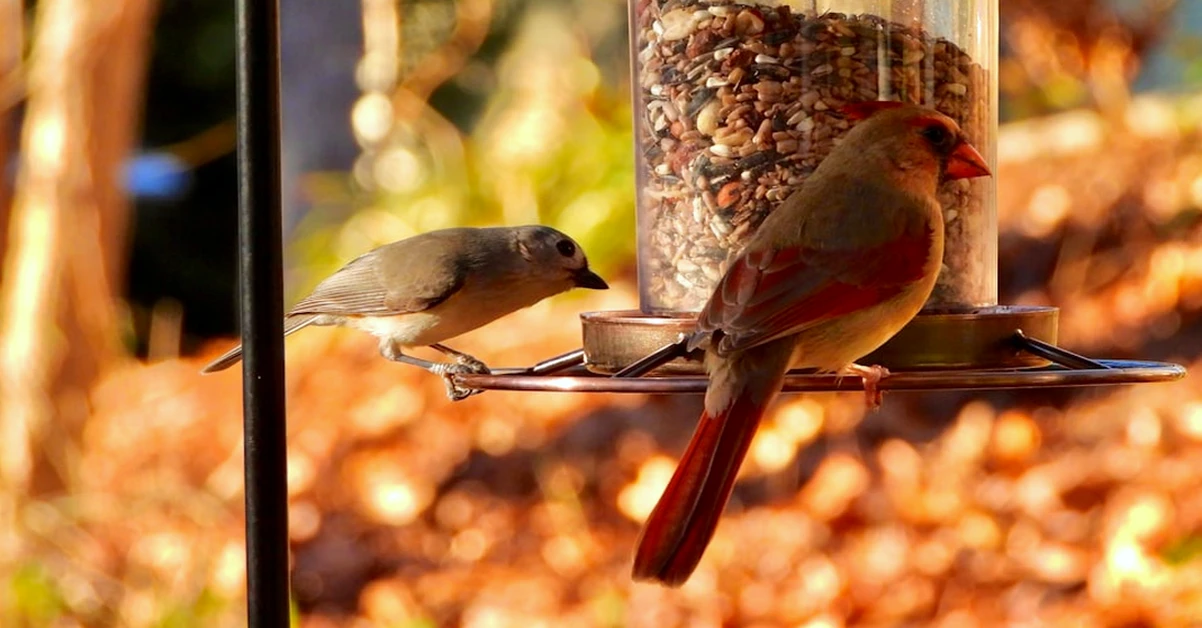
Choose a tray, cage or raised platform
Choose a drained, removable tray that suits the birds you see and can be washed easily; no feeder is rat-proof if food remains overnight.
| format | Typical tray width | Drainage and cleaning | Best visitors | Best garden setting |
|---|---|---|---|---|
| Open tray | 30 to 45 cm | Good only with holes and a removable base | Blackbirds, robins, thrushes | Quiet, low-rat activity gardens |
| Caged tray | 35 to 50 cm | Good if cage and tray separate | Small birds, depending on gaps | Gardens with pigeons or squirrels |
| Raised platform | 40 to 60 cm | Usually quick to sweep and wash | Robins, blackbirds, starlings | Damp ground or cat-prone plots |
| Heavy-duty tray | 45 to 60 cm | Strong if plastic or metal is non-porous | Larger mixed flocks | Exposed, windy gardens |
Cage gaps decide who can enter
A guardian cage works only if its openings admit your target birds. Check the internal entrance size rather than relying on product photos.
A removable ground tray is the simplest starting point for most gardens. Choose one with proper drainage and enough room for the birds you actually see.
- Drainage holes help sunflower hearts and mealworms dry after light rain.
- A removable base makes it possible to wash away droppings and old food.
- A wider tray gives blackbirds and thrushes space to feed without crowding.
Weight stops tipping, not rats
A heavy, non-porous plastic or metal tray resists wind and tipping, but it will not prevent rats if seed is left after dark. Prioritise a removable base over decorative features.
Match the cage aperture to your regular visitors
For a caged bird feeder, measure the usable opening between bars rather than trusting a label such as “small-bird proof”. An aperture of about 50 mm is commonly intended for smaller garden birds and may prevent many blackbirds and thrushes from entering. If blackbirds are regular visitors, look for a roomier guardian with an entrance around 60 to 70 mm, then observe whether they can enter and leave without brushing the cage.
Wider openings can also admit starlings or larger opportunists, so there is no single perfect size. A cage can limit access by pigeons, squirrels and some pets, but it is not a substitute for an open position, sensible portions and routine cleaning.
A UK ground-feeder buying checklist
Before buying, check how the feeder will cope with a British wet winter rather than choosing by appearance alone. A feeding tray or bird feeding platform should have raised edges, drainage holes and a removable feeder tray that can be lifted out, washed and dried fully. Choose non-porous metal or robust recycled plastic, a stable weighted base for windy sites, and fittings that do not trap food in inaccessible seams.
A cover can reduce rain on food but should not make birds feel boxed in or prevent cleaning. For a raised bird feeder or cage model, also check leg stability, weather-resistant fixings, the actual mesh aperture and whether the whole unit can be dismantled without tools.
Advertisement
Stop wet food, rats and ambushes
Discourage rats with a strict daytime routine: offer small portions, remove leftovers before dusk and place the tray on paving, gravel or another washable surface.
A workable placement routine
Position the tray 1 to 2 metres from dense cover, giving birds a view of approaching cats and a short escape route to shelter. Keep it away from hanging feeders so spilled seed does not create a hidden feeding patch.
Hygiene after rain and illness
Remove soaked food after heavy rain, then wash, rinse and dry the tray before refilling. If birds appear ill, stop feeding temporarily and clean every feeding point.
Offer a small dry portion.
Remove any wet food.
Clear leftovers and sweep spills.
Wash and dry the tray.
Frequently asked questions
What can I use as a ground feeder for birds?
Use a shallow plastic or metal tray with drainage holes on paving, gravel or another washable surface. Remove food before dusk and wash the tray when soiled.
How do I feed ground birds without attracting rats?
Offer only a small daytime portion, clear leftovers before dusk and sweep seed beneath nearby hanging feeders. Avoid bread, scraps and large cereal-heavy mixes.
What cage gap allows blackbirds into a feeder?
A gap around 50 mm can exclude blackbirds and thrushes while allowing smaller birds through. Check the actual aperture against your largest regular visitor.
Choose the routine before the feeder
A ground tray is worthwhile when blackbirds, robins or thrushes visit regularly and you can clear it each evening; start small and observe for 3 to 7 days before changing food or adding a cage.
- Choose a drained, removable tray rather than scattering food over grass or soil.
- Match cage gaps to the largest bird you want to feed, not only the smallest.
- Keep portions small, clear leftovers before dusk and sweep fallen seed nearby.
- Place the tray in open view with cover close enough for a quick escape.
Where should I put a ground bird feeder?
Put it on a drained, washable surface about 1 to 2 metres from dense shrubs. Birds need clear sightlines and a practical route to cover.
Advertisement
Related sources
These articles can help you explore the topic in more depth:
- Ground Bird Feeders — reallywildbirdfood.co.uk
- Ground Bird Feeders With Trays — lovegardenbirds.co.uk
- Bird Feeders | Hanging, Window, Table & Pole Feeders — birdfood.co.uk
- Bird Feeders for Feeding Wild Garden Birds — shopping.rspb.org.uk

Editorial Team
Our team consists of passionate British birdwatchers and garden wildlife enthusiasts. We provide honest, practical advice on feeding garden birds, choosing the right feeders, and making your outdoor space a haven for UK wildlife — guided by RSPB best practice and real garden experience.
The information on this website is provided for general guidance only. Always follow RSPB and BTO best practice when feeding garden birds. Product recommendations may include affiliate links — see our disclosure policy for details.