Godshill Scouts have built 75 bird boxes to support local wildlife, a practical community project with potential value well beyond the number itself. Reported by Isle of Wight Radio, the initiative arrives at a useful moment for householders: autumn is one of the best times to plan, build and put up nest boxes ahead of the next breeding season.
But 75 boxes do not automatically mean 75 successful nests. A nest box is only useful when its design suits a local species, its location is safe, and the surrounding garden provides insects, cover and water. The real lesson for UK gardeners is not simply to install more boxes; it is to make each one part of a functioning garden habitat.
Table of Contents
Advertisement
Why community-built bird boxes matter
Projects involving Scouts, schools and local groups do more than create timber boxes. They help turn wildlife conservation into a visible, repeatable local activity. A single household may add one or two nest sites; a coordinated project can improve the availability of potential nesting cavities across an entire village, estate or network of gardens.
This matters because many familiar garden birds historically nest in holes in mature trees, old orchards, walls and farm buildings. Modern gardens can be tidy, heavily fenced and short of mature trees with natural cavities. Renovated buildings may also remove cracks and eaves once used by species such as house sparrows and swifts. Nest boxes cannot replace every lost nesting feature, but they can provide worthwhile alternatives for some birds.
For gardeners, the Godshill project is a reminder that wildlife support works best at neighbourhood scale. If several nearby homes offer suitable boxes, insect-friendly planting and safe feeding areas, young birds have more opportunities to find both a nest site and food after fledging.
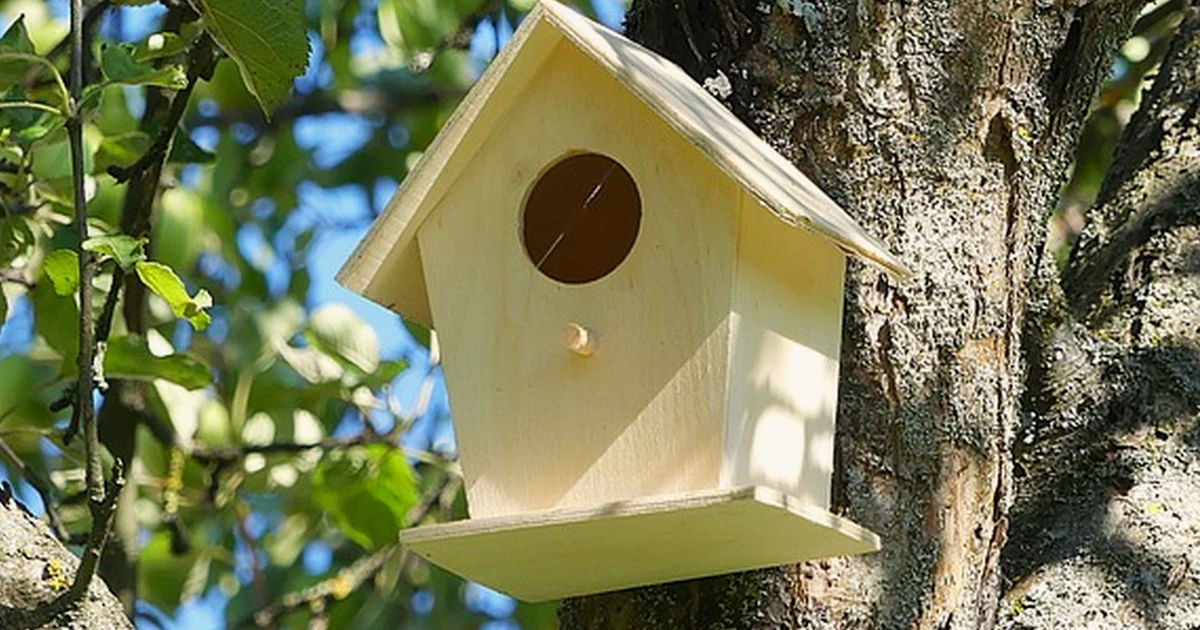
A bird box is not a universal bird home
Match the entrance hole to the likely visitor
The diameter of the entrance hole determines which birds can use a conventional small-hole nest box. For many UK gardens, these are sensible general guidelines:
- 25 mm hole: mainly blue tits, coal tits and marsh tits where present.
- 28 mm hole: suitable for great tits and house sparrows as well as blue tits.
- 32 mm hole: may be used by house sparrows, larger tits and nuthatches in suitable areas.
- Open-fronted box: better suited to robins, wrens, pied wagtails and spotted flycatchers, though these need particularly sheltered placement.
A standard 25 mm box is often marketed as a general bird box, yet it will exclude some species people hope to help. Conversely, making the hole too large can allow larger competitors access. The best approach is to choose a box for the birds already recorded in the garden or neighbourhood, rather than expecting a box to attract every species.
House sparrows deserve special consideration in built-up areas. They are social nesters and may use boxes installed in small groups, often beneath eaves or on a building wall. A solitary box in the middle of an exposed fence may be far less useful to them than two or three neighbouring chambers in a quieter position.
Material and construction affect welfare
Untreated, durable timber is usually a sound choice. Wood offers insulation and is easier to repair than many decorative alternatives. The roof should overhang the front to reduce rain entering the hole, drainage holes should be present in the base, and the box should open for cleaning after the breeding season.
Avoid adding a perch beneath the entrance. Most hole-nesting birds do not need one, while a perch may make it easier for predators to gain purchase. Boxes should also have a rough internal surface or shallow grooves below the hole so fledglings can climb out.
Advertisement
Placement is the difference between a box and a breeding site
Putting up boxes in autumn gives birds time to inspect them, and some birds may use them as overnight shelter during colder weather. However, placement needs more thought than simply choosing the nearest tree.
For small-hole boxes, a position roughly 2 to 4 metres above ground is often appropriate, provided access is safe for installation and later cleaning. Aim the entrance between north and east where possible, avoiding the strongest sun and the prevailing wettest winds. A south-facing box can overheat in prolonged direct summer sunshine, especially on a bare wall.
Keep a clear flight path to the entrance, but do not place the box in a completely exposed location. Dense thorny shrubs or a nearby hedge can provide cover for fledglings, although branches must not be close enough for cats or squirrels to reach the box easily.
Open-fronted boxes need more shelter than hole-fronted designs. Position them in vegetation, a quiet porch-like area or against a sheltered wall, where heavy rain and direct wind are less likely to reach the nest.
Do not create a predator trap
Cats are a reality in many UK gardens, and any nesting project should acknowledge this rather than ignore it. A box fixed to a smooth pole with an appropriate predator guard can be safer than one mounted low on a fence beside climbing plants. If mounting on a tree, avoid nearby branches that offer easy access from above or the side.
Predation is a natural part of wildlife, but poor siting can make a nest box unnecessarily vulnerable. The aim is not to eliminate every risk; it is to avoid adding an artificial nesting site in a position where predators can repeatedly exploit it.
Nest boxes need food around them, not just seed below them
A common misunderstanding is that filled bird feeders are enough to support breeding birds. Seed feeders are valuable for many adult birds, particularly outside the nesting season, but chicks of tits, robins and many other garden species need large quantities of invertebrates. Caterpillars, spiders and other insects are essential high-protein food during the nesting period.
A garden with a bird box but no insect life can therefore be a poor nursery. To make a nest-box project genuinely useful, gardeners can:
- grow native or wildlife-friendly shrubs and climbers;
- leave some leaf litter and deadwood in a managed corner;
- avoid routine insecticide use;
- allow part of the lawn to grow longer or create a small wildflower patch;
- include a shallow, regularly cleaned water source;
- provide dense shrubs where young birds can shelter after leaving the nest.
Feeders still have a role, especially in late winter and during cold spells. Offer quality seed mixes, sunflower hearts or peanuts only in a secure mesh feeder. Crucially, clean feeders regularly and remove wet, mouldy food. Feeding stations can concentrate birds, so hygiene is not optional.
What householders can learn from the Godshill example
The strongest feature of the Scouts’ project is its practical scale. It demonstrates that helping birds does not require a large nature reserve or specialist equipment. A well-made box, installed thoughtfully, can be a meaningful addition to an ordinary garden.
That said, gardeners should resist treating box numbers as the main measure of success. One occupied box that fledges healthy young is more valuable than several poorly sited boxes left unchecked. Start with one or two suitable boxes, monitor activity from a respectful distance, and improve the surrounding habitat over time.
If a box remains unused for a year, do not assume it has failed. Occupancy can vary with local bird populations, weather, predators and alternative natural nest sites. Leave it in place unless it is clearly unsafe, badly exposed or damaged. Birds may take time to discover and trust a new site.
Advertisement
Safe monitoring and annual maintenance
Watching birds visit a box can be rewarding, but disturbance can cause harm. Do not open an active box, handle eggs or chicks, or repeatedly approach the entrance to check progress. A nest camera should only be fitted before the season begins and installed in a way that does not alter access, ventilation or security.
Once breeding has finished and the box is clearly empty—typically in autumn—wear gloves, remove old nesting material and clean the inside with boiling water. Let it dry thoroughly before closing it again. Do not use household disinfectants or insecticides inside the box unless advice from a recognised wildlife organisation specifically recommends a safe method.
FAQ
When should I put up a bird box in the UK?
Autumn is ideal because boxes are ready for birds to investigate before spring, and some may be used for winter roosting. However, a box can be installed at any time if it is safely positioned; just avoid disturbing an active nest.
Will a nest box definitely attract birds?
No. Occupancy depends on the species nearby, box design, placement, local food supplies and the availability of natural nest holes. Leave a suitable box up for more than one season before judging its usefulness.
Should I put food inside a new bird box?
No. Food in a nest box can attract rodents, insects and mould. Provide food in a separate, clean feeder and focus on making the garden rich in natural invertebrate food.
How far apart should bird boxes be?
It depends on the species. Tits can be territorial, so similar boxes are often best spaced apart. House sparrows are more social and may prefer neighbouring boxes or a terrace-style box. Avoid placing several identical boxes close together unless they are intended for a colonial species.
Source: Isle Of Wight Radio — Fri, 09 Oct 2026 17:00:22 GMT

Editorial Team
Our team consists of passionate British birdwatchers and garden wildlife enthusiasts. We provide honest, practical advice on feeding garden birds, choosing the right feeders, and making your outdoor space a haven for UK wildlife — guided by RSPB best practice and real garden experience.
The information on this website is provided for general guidance only. Always follow RSPB and BTO best practice when feeding garden birds. Product recommendations may include affiliate links — see our disclosure policy for details.