A milk bottle bird feeder can give UK garden birds a useful extra feeding point, but only when its seed stays dry and every cut edge is safe. Use small, sheltered feeding openings, a firm perch and drainage holes beneath the seed; place it away from cats and nearby glass. Fill it with suitable dry seed, discard any wet food promptly, and wash the feeder at least weekly to reduce disease risk.
Table of Contents
Advertisement
Follow this process and keep seed dry
- Wash the empty container with hot water and mild washing-up liquid, then rinse and dry it fully.
- Choose a rigid plastic bottle or handled jug, not a cardboard milk carton for permanent outdoor use.
- Mark two small feeding windows above the seed level, then cut and smooth them.
- Make drainage holes, fit a short wooden perch, and hang the feeder where cats cannot wait below it.
- Add a small amount of dry food and wash the feeder at least once each week.
Keep each window at least 3 cm above the base. That strip of uncut plastic is a seed reservoir, like the raised side of a baking tray that stops food sliding onto the floor.
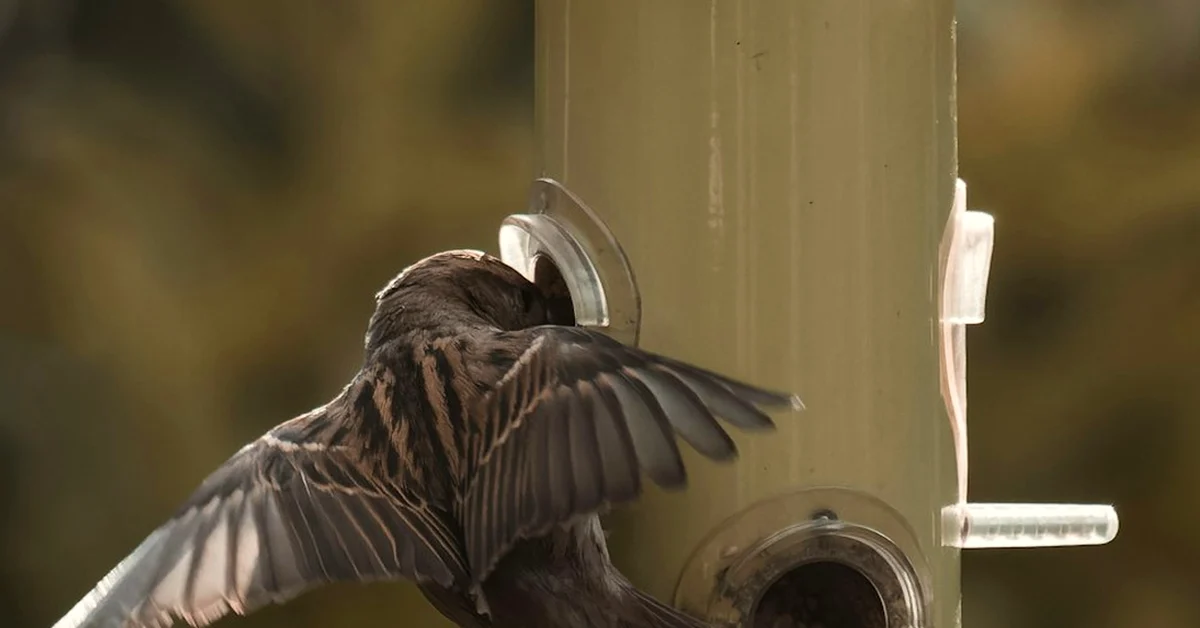
Choose a container that copes with rain
Choose a firm container and the feeder will stay steadier straight away.
Compare the three common containers
| Container | Typical cost | Outdoor life | Rain and movement |
|---|---|---|---|
| Thin plastic milk bottle | Free | Several weeks to a few months | Can spin; best under cover |
| Rigid handled milk jug | Free | Several months if uncracked | Most stable; handle gives a strong hanger |
| Cardboard milk carton | Free | Days to a few weeks | Softens, splits and leaks in rain |
Reject damaged plastic before cutting
Reject any container that is cracked, split or weakened, as it may fail once it is hung outdoors.
Advertisement
Build a rain-safe milk bottle feeder
Cut raised windows and smooth each edge
For a balanced DIY bird feeder, draw two windows about 4 cm wide by 5 cm high on opposite sides of a standard milk bottle, keeping the bottom edge of each one at least 3 cm above the base. Leave a 1 cm uncut border around every window so the plastic keeps its shape and does not split when birds land. Start each cut with a small hole, use scissors rather than tearing the plastic, and round every corner before smoothing the edge with fine sandpaper or covering it with firmly fixed tape.
These raised feeding windows hold a useful layer of dry bird seed while giving small garden birds room to reach it.
Add drainage, perch and a secure hanger
Pierce 4 to 6 small holes across the lowest part of the base with a heated skewer handled by an adult, or a drill. Each hole only needs to be roughly 3 to 4 mm wide, small enough to hold seed but large enough for trapped water to leave.
Push a clean, untreated wooden dowel or smooth twig, about 10 to 12 cm long, through two small holes below one window. Place it 2 cm below the opening, so a bird can stand without blocking the entrance.
Thread a thick garden string or a reusable cable tie through the jug handle. If using a bottle without a handle, make two holes near the cap and use two equal lengths to form a loop, which stops the bottle leaning like a wonky picture frame.
Rinse and dry fully
Windows 3 cm above base
4 to 6 base holes
Stable, sheltered spot
Place, fill and clean it safely
Hang the feeder between 1.5 and 2 metres above ground, at least 2 metres from dense cover where a cat can hide, with a shrub or tree within a short flight for birds to escape into.
Safe bird feeder placement also reduces collisions and unwanted visitors. Put the feeder either within about 1 metre of a window, where birds cannot build up much speed, or more than 10 metres away; avoid the middle distance, which can make a window strike more severe. A sheltered bird feeder under an eave or light tree canopy is less likely to collect rain, but keep it clear of branches or fences that give squirrels an easy route.
If squirrels become persistent, move the plastic bottle bird feeder to a smoother hanging point and use a baffle or a separate squirrel-resistant feeder rather than adding sticky coatings or repellents.
Use food that suits the birds
Choose food by the birds you hope to see. Sunflower hearts are a clean, high-energy choice for blue tits, great tits, chaffinches and robins, while a dry small-seed mix containing millet can appeal to house sparrows and dunnocks. Nyjer seed is best offered in a purpose-made fine-port feeder, so it is not usually practical in a milk jug bird feeder. Avoid bread, salted nuts, cooked leftovers, sugary foods and any seed that smells stale, feels damp or shows mould.
Do not put loose whole peanuts in this type of feeder; use a proper peanut feeder instead. Refill little and often so garden bird seed remains fresh.
Clean before wet food turns harmful
Wash the feeder at least weekly and immediately after seed gets wet or mouldy. Dry it fully before refilling, because damp seed can spoil quickly.
Your questions answered
How do I make a bird feeder with a milk bottle?
Wash and dry the bottle, cut two raised windows, add 4 to 6 drainage holes, smooth the cuts and hang it securely. Keep each window at least 3 cm above the base and fill it only one-third full at first.
Can I make a birdhouse from a milk jug?
A milk jug is not a safe long-term birdhouse because it gives poor insulation and weather protection. Use a wooden nest box with the correct entrance hole instead.
Why is my bottle feeder full of wet seed?
Wet seed usually means the windows are too large, too low, or facing driving rain. Empty it, wash it, dry it, then reduce the opening and move it under light cover.
What food should I put in a bottle feeder?
Sunflower hearts and dry small-seed mixes suit most bottle feeders. Do not use bread, salty food, wet seed or loose whole peanuts.
How high should I hang a homemade bird feeder?
Hang a homemade feeder between 1.5 and 2 metres above ground where cats cannot reach it easily. Keep nearby cover for escape, but not a thick bush directly beneath it.
Why does my feeder keep spinning?
A feeder spins when it hangs from one weak point or uses thin string. Use a handled jug or two equal hanging strands through holes near the cap.
How often should I wash a bird feeder?
Wash a bottle feeder at least weekly and immediately after seed gets wet or mouldy. Dry it fully before refilling, because damp seed can spoil quickly.
- Keep feeding windows 3 cm above the bottle base so seed stays contained.
- Use drainage holes and small seed portions to limit damp, spoiled food.
- Choose a rigid handled jug where possible, especially in exposed English gardens.
- Wash, rinse and fully dry the feeder every week, or sooner after rain.
- Hang it away from cat ambush points and unsafe window-strike distances.
Advertisement
Further reading
If you want to learn more about this topic, these sources may interest you:
- Wildlife Projects for Kids: Milk Jug Bird Feeders — greatstems.com
- Recycled bottle bird feeder - Thrive Gardening — thrive.org.uk

Editorial Team
Our team consists of passionate British birdwatchers and garden wildlife enthusiasts. We provide honest, practical advice on feeding garden birds, choosing the right feeders, and making your outdoor space a haven for UK wildlife — guided by RSPB best practice and real garden experience.
The information on this website is provided for general guidance only. Always follow RSPB and BTO best practice when feeding garden birds. Product recommendations may include affiliate links — see our disclosure policy for details.