A sparrow nest box suits gardens where House Sparrows already feed, call or nest nearby. Choose three separate chambers with 32 mm holes, drainage, a weatherproof roof and a secure position 2–4 metres high beneath sheltered eaves.
Table of Contents
Advertisement
Is a sparrow terrace right for your garden?
A sparrow terrace suits sociable House Sparrows, Passer domesticus, which often nest close to neighbouring pairs.
Signs a terrace may be occupied
Regular groups are the strongest sign. Look for sparrows at seed, around eaves, dust-bathing, or moving through hedges in late winter and spring.
Start with one box if sightings are occasional, the garden is narrow, or only one calm wall is available. Leave it fixed for at least a breeding season before judging it.
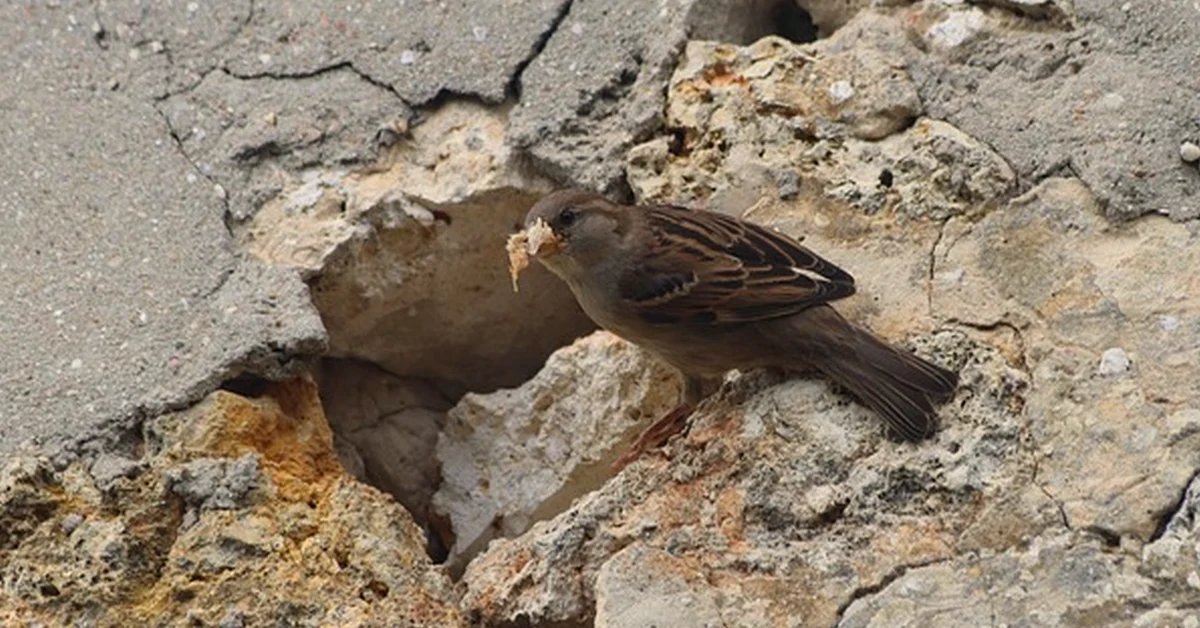
A 32 mm entrance is intended chiefly for House Sparrows, Passer domesticus, but a nest box cannot guarantee its occupants. Great Tits may sometimes inspect or use an entrance of this size, while Blue Tits generally favour a smaller hole of around 25 mm. Tree Sparrows can also use nest boxes in parts of the UK where they occur, although they are much less widespread and should not be assumed to be the visitors.
Starlings normally need a larger entrance, so a standard sparrow terrace is not a suitable starling box. Watch birds entering during the breeding season from a distance; do not open a box to identify eggs, chicks or nesting material.
Choose a terrace, single box or woodcrete
Build quality matters more than decoration: a thin box may soon become damp after repeated English rain.
Compare the practical options
| Type | Best setting | Typical UK cost | Expected service life |
|---|---|---|---|
| Three-chamber timber terrace | Established sparrow group | £35 to £70 | 5 to 10 years if thick timber is maintained |
| Single thick-timber box | Occasional local sparrows | £20 to £40 | 5 to 10 years if dry |
| Woodcrete multi-chamber box | Permanent wall position | £55 to £110 | 10 to 20 years |
Check these details before buying
Choose untreated FSC timber around 15 to 18 mm thick, or woodcrete, with drainage holes, high ventilation gaps, a projecting roof and strong rear fixings. Perches are unnecessary and can help predators.
Look for a three-chamber model only after checking that local House Sparrows are active. A well-drained, thick-walled terrace is a better choice than a thin ornamental box.
- Three separate 32 mm entrances allow neighbouring House Sparrow pairs to choose their own chamber.
- Drainage and a projecting roof help keep nesting material dry during prolonged rain.
- Wall-mounted designs can sit beneath eaves, away from busy feeders and cat-accessible ledges.
Advertisement
Where should a sparrow terrace be mounted?
Mount it 2 to 4 metres above ground beneath eaves where possible, with a clear approach and safe, secure wall fixings.
Read the wall, not just the compass
An east- or north-east-facing wall often avoids fierce afternoon sun. Avoid exposed south- or west-facing walls, driving rain and strong prevailing wind.
Under eaves, out of direct rain.
Usually 2 to 4 metres.
Open approach, no close branches.
Not above feeders, doors or seating.
Block easy predator routes
Keep branches, trellis tops and flat ledges away from the entrance. Once occupied, the Wildlife and Countryside Act 1981 means you must not open, move or alter the box until breeding finishes.
Avoid heat, damp and nesting disruption
Dry, durable chambers are essential: roof overhangs, drainage holes and sound walls prevent wet nesting material.
A simple DIY terrace plan
Use untreated 18 mm timber, three 32 mm entrance holes and separate chambers. Add two or three 6 mm drainage holes per chamber, narrow roof ventilation gaps and a roof that can be opened only outside breeding time.
Leave breeding birds alone
Clean only in autumn or winter when certain the box is empty. Remove old material with gloves, check drainage and fixings, then close it before late-winter prospecting.
For a practical three-chamber timber terrace, use 18 mm untreated FSC timber and make three internal chambers about 120 mm wide, 150 mm deep and 180 mm high. A straightforward build needs a tape measure, square, pencil, saw, drill, 32 mm hole cutter, 6 mm bit, exterior screws and non-toxic exterior wood treatment for the outside faces only. Cut a long back board, a sloping roof with a generous front overhang, a floor divided by two partitions, and a hinged or screw-fixed front panel.
Drill each 32 mm entrance above floor level, add drainage holes beneath every chamber, and leave narrow ventilation gaps high under the roof rather than beside the entrances.
Before the breeding season, check that the terrace has a safe way to remove old nesting material: a hinged roof, removable front or side panel secured with screws is more useful than a sealed decorative design. In late autumn, once you are certain it is empty, wear gloves, remove the old nest, brush out loose debris and make sure every drainage hole remains open.
Check for loose screws, warped timber, roof leaks and damaged rear fixings at the same time. Refit the access panel firmly before winter, because House Sparrows may investigate potential nesting sites early in the year and may also use sheltered boxes for roosting.
FAQs
What is the best box for house sparrows?
A three-chamber terrace suits an established group; one thick-walled box suits quieter gardens. Choose 32 mm holes, drainage and ventilation.
What height should a sparrow box be?
Mount it between 2 and 4 metres above ground, preferably beneath eaves and beyond cat-accessible routes.
Can blue tits use a sparrow terrace?
Blue Tits normally need smaller entrance holes. Use a separate small-hole box if they are your target species.
Should i put a sparrow box near a bird feeder?
Keep it away from the feeder's busiest flight path and never directly above a feeder.
When should i clean a sparrow nest box?
Clean it in autumn or winter only when you know it is empty. Never open an active nest.
How long does a woodcrete nest box last?
A properly fitted woodcrete box can last 10 to 20 years, but needs strong masonry fixings.
Advertisement
Choose the wall before the box
- Choose three chambers only where House Sparrows already behave like a local group.
- Mount the box 2 to 4 metres high beneath sheltered eaves with a clear approach.
- Buy thick timber or woodcrete with drainage, ventilation and secure fixings.
- Leave an occupied box untouched, then clean it only when empty outside breeding time.
Will sparrows use a nesting box?
They may when they already forage, roost or nest nearby. Give a new box at least one breeding season and avoid moving it.
Which way should a sparrow nest box face?
East or north-east is often suitable. Avoid direct afternoon heat, prevailing rain and strong winds.
Further reading
If you want to learn more about this topic, these sources may interest you:
- RSPB Sparrow Terrace Nest Box — shopping.rspb.org.uk
- Sparrow Terrace Nest Boxes — wildcare.co.uk

Editorial Team
Our team consists of passionate British birdwatchers and garden wildlife enthusiasts. We provide honest, practical advice on feeding garden birds, choosing the right feeders, and making your outdoor space a haven for UK wildlife — guided by RSPB best practice and real garden experience.
The information on this website is provided for general guidance only. Always follow RSPB and BTO best practice when feeding garden birds. Product recommendations may include affiliate links — see our disclosure policy for details.