The best bird feeder for UK homes depends on where it will hang, which birds visit and how easily you can clean it.
Table of Contents
Advertisement
Choose a feeder for your English space
Choose a feeder you can remove, wash and dry every week without spilling seed over a shared path.
Start with your space, not the box
Consider where the feeder will hang and how easily you can check, clean and refill it before choosing a model.
Match the feeder to the birds you want
Once you know what your space allows, choose a feeder and food that suit the birds you hope to attract.
Squirrels, cats and feeder access
Use the setting as a quick filter before choosing a garden bird feeder. For small garden bird feeding, a compact hanging tube with a seed tray is easier to monitor than several feeders and keeps waste off a patio. A balcony bird feeder should be enclosed or fitted with a catch tray, placed where falling food cannot reach a neighbour’s space. Window feeders suit close-up viewing but need daily checks for wet seed.
In homes with cats or dogs, hang food away from ambush points and never leave mealworms on the ground. Where squirrels are active, choose a squirrel-proof bird feeder on a pole with clear space around it rather than relying on the feeder mechanism alone.
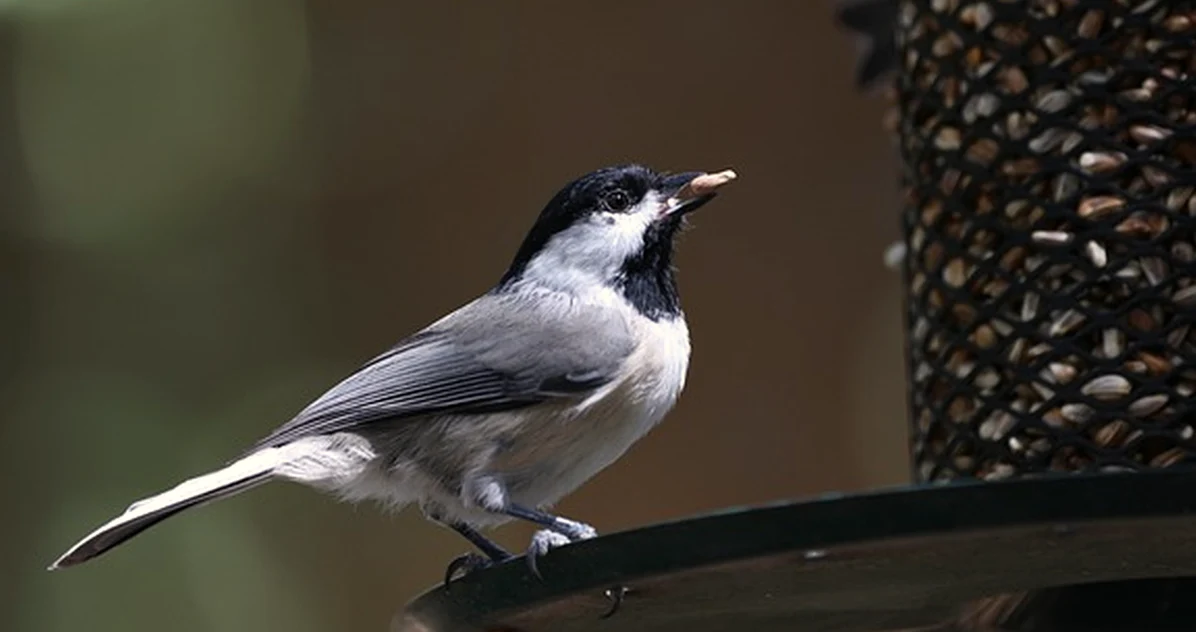
Match bird food to common UK garden birds
Fresh, low-waste food beats a large cheap bag of mixed seed.
Choose food that leaves less below
| Feeder and food | Likely visitors | Spill risk | Cleaning rhythm |
|---|---|---|---|
| Tube with sunflower hearts | Tits, sparrows, finches | Low | Weekly, sooner after rain |
| Nyjer feeder with nyjer | Goldfinches | Low to medium | Weekly |
| Suet cage with fat balls | Tits, starlings, woodpeckers | Low | Every 5 to 7 days |
| Sheltered tray with mealworms | Robins, blackbirds | High | Daily wipe, weekly wash |
A removable tube feeder is a sensible starting product for most smaller spaces. Look for a base and ports that come apart without tools, so damp seed cannot hide in the seams.
- Holds sunflower hearts with less husk waste on patios and balconies
- Restricts access better than open trays when pigeons dominate the garden
- Allows weekly washing of the tube, ports and base separately
Use small, fresh amounts
Choose the format as well as the food. A metal-and-polycarbonate tube bird feeder is durable, keeps sunflower hearts dry and is a good low-waste bird seed option for tits, finches and sparrows, although larger birds may struggle to use it. A purpose-built nyjer seed feeder has narrow ports that reduce waste and suits goldfinches, but it must be kept dry because fine seed can clump. A fat ball feeder without disposable plastic nets gives tits and starlings high-energy food in colder weather; remove soft or mouldy fat promptly.
A sheltered mealworm tray attracts robins and blackbirds but requires the closest supervision, as exposed garden bird food can be taken by pigeons or spill onto hard surfaces.
Advertisement
Place and clean feeders to prevent harm
Place the feeder where it can be checked daily and washed safely, either within about 1 metre of a window or more than 10 metres away.
Keep cover nearby, not underneath
Keep the feeder away from places where cats or other predators can use nearby cover as an ambush point.
Stop feeding when warning signs appear
Make bird feeder hygiene part of the seasonal routine, not just a weekly feeder cleaning task. In warm or wet weather, reduce quantities and remove damp seed before it moulds or starts to germinate; a feeder that empties within a few days is safer than one kept full. Do not put loose whole peanuts out when adults may carry food to nestlings: offer them only in a suitable mesh feeder, or use safer small foods such as sunflower hearts.
For bird seed spill prevention, fit a seed catcher where practical, sweep up husks and uneaten food, and move the feeding point if rats, repeated pigeon gatherings or persistent mess develop. If several birds appear unwell, stop feeding, clean and dry all equipment, and follow any temporary local wildlife-health advice before restarting.
Your questions answered
What is the best type of bird feeder for birds in the UK?
A removable tube feeder with sunflower hearts is the best first choice for many UK gardens and balconies. It suits several small seed-eaters and creates less waste than an open tray. Choose another type only if you have a clear target species, such as robins or goldfinches.
How often should I clean a bird feeder?
Clean a bird feeder at least once every seven days and sooner after rain, droppings or damp food. Empty it, wash it, rinse it thoroughly and let it dry fully. Daily checks take less than a minute.
Where should I put a feeder to stop birds hitting windows?
Put the feeder within 1 metre of glass or more than 10 metres away to reduce serious window strikes. Make nearby glass visible with external decals, cords or other markers. Never ignore a stunned bird beneath the window.
Should I stop feeding birds if I see a sick one?
Stop feeding immediately if birds look ill or dead birds appear at the feeding spot. Remove food and water, clean the equipment, and allow the area to dry before restarting. This limits contact around shared feeding surfaces.
Do squirrel-proof bird feeders really work?
Squirrel-proof feeders work only when squirrels cannot jump onto them from fences, trees or sheds. Leave a gap of roughly 2 to 3 metres from launch points. A guarded feeder on a poorly placed pole still becomes a squirrel feeder.
Can my council stop me feeding birds?
A council or landlord can act if bird feeding creates a persistent nuisance, waste problem or rodent issue. Check tenancy rules for communal balconies and avoid food falling onto paths or neighbouring property. The Wildlife and Countryside Act 1981 does not give a general right to create a hygiene nuisance.
- Choose a feeder you can remove and dry weekly, not simply the biggest model.
- Use sunflower hearts or other fresh, species-suited foods in modest amounts.
- Keep food away from cat ambushes, risky windows and squirrel launch points.
- Pause feeding if food is mouldy, rats persist or birds appear unwell.
Further reading
If you want to learn more about this topic, these sources may interest you:
- Our latest guidance on feeding garden birds — rspb.org.uk
- Bird Feeders | Hanging, Window, Table & Pole Feeders — birdfood.co.uk
- Where a garden bird feeder sits matters more than style
- Your hanging bird feeder may be feeding pigeons

Editorial Team
Our team consists of passionate British birdwatchers and garden wildlife enthusiasts. We provide honest, practical advice on feeding garden birds, choosing the right feeders, and making your outdoor space a haven for UK wildlife — guided by RSPB best practice and real garden experience.
The information on this website is provided for general guidance only. Always follow RSPB and BTO best practice when feeding garden birds. Product recommendations may include affiliate links — see our disclosure policy for details.