Table of Contents
Advertisement
Why this bird feeder advice matters in October
Surrey Live’s warning to move bird feeders away from a common garden position is timely. In early autumn, feeding stations can become much more than a welcome stop for blue tits, robins and finches: they can become a dependable food source for rodents as natural supplies change and cooler weather encourages mice and rats to search for sheltered, regular feeding opportunities.
The common problem position is too close to the house — especially beside external walls, patios, sheds, compost areas, bins, French doors or places where there is already cover. A feeder hung close to a kitchen window may be convenient to refill and enjoyable to watch, but spilled seed does not stay exclusively available to birds. It falls to the ground, collects in paving gaps and can be carried into cracks around buildings.
This does not mean garden bird feeding is inherently irresponsible, nor that every garden with a feeder will develop a rat issue. It means that feeder placement, food choice and cleaning routines matter as much as the feeder itself. For UK households that want to support wildlife without attracting unwanted visitors, October is a useful moment to reset the feeding area before winter demand increases.
The real issue is not the feeder — it is the food spill
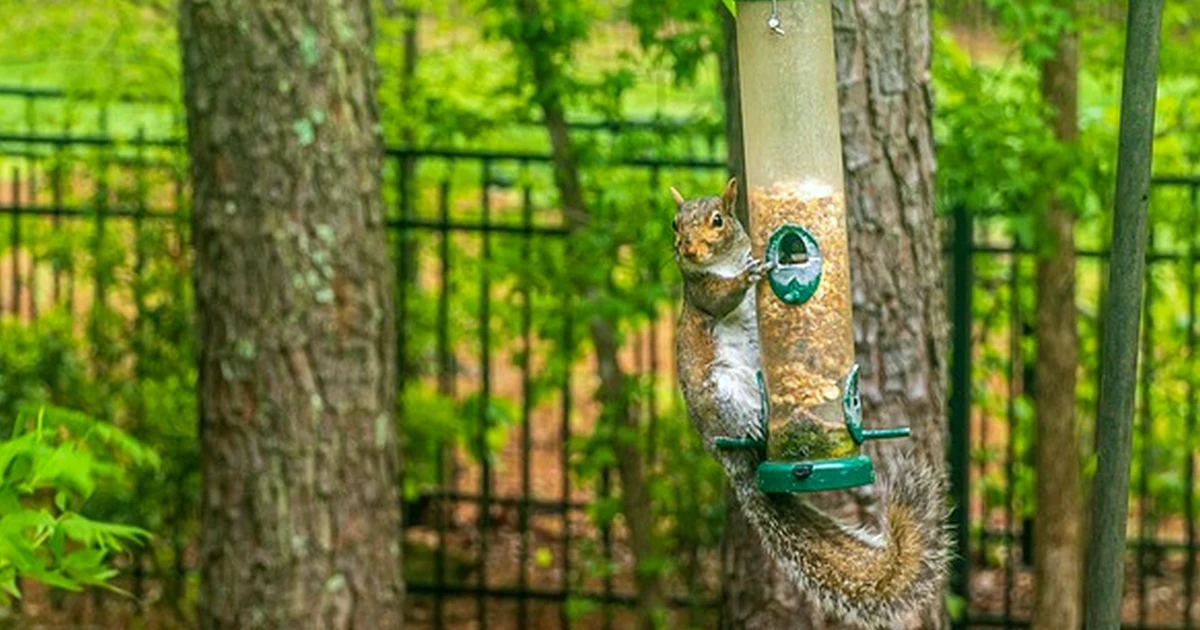
Birds naturally drop food. Goldfinches flick husks from nyjer seed, starlings scatter suet fragments, and larger birds can knock seed from open trays. Squirrels may also dislodge food while trying to reach a feeder. The ground beneath a busy feeding station can therefore become a concentrated food patch.
Rats are opportunistic rather than fussy. They are drawn to sunflower hearts, mixed seed, peanuts, suet, mealworms and kitchen scraps. Once they learn that food is repeatedly available in one place, they may return after dark and establish a regular route between shelter, water and the feeding area.
A feeder placed against the house can make that route particularly easy. Walls, fences, dense shrubs, decking voids and stored garden materials offer cover, while gaps around pipes, air bricks or poorly sealed doors may provide possible access to buildings. The point of moving a feeder is not simply to make rodents work harder; it is to break up this convenient chain of food, cover and access.
Why autumn changes the calculation
In autumn, birds need high-energy food as temperatures fall and daylight shortens. Continuing to feed them can be valuable, particularly in gardens with limited natural berries, seedheads or insect habitat. Yet this is also a period when a careless feeding set-up becomes more noticeable.
Fallen leaves can hide discarded seed. Wet weather turns husks and food debris into a mess that is difficult to monitor. Gardens may also be quieter after dark, allowing rodents to feed undisturbed. A feeder that appeared tidy in summer can become a recurring source of ground food in October.
Advertisement
Where should a bird feeder go instead?
There is no single perfect distance for every garden, but the aim is to create a feeding station that is away from the house and obvious rodent cover, while still safe for birds.
A practical option is a freestanding feeding station on open ground, where dropped food can be seen and cleared. Avoid placing it immediately beside a shed, hedge, compost heap, stacked logs, dense ivy or a fence line that gives rodents concealed access.
At the same time, do not put feeders in an exposed position where small birds have no nearby escape cover. A shrub or tree several metres away can provide a refuge without allowing a cat or other predator to wait directly beneath the feeder. Good placement is a balance: birds need visibility and an escape route; rodents should not have a protected tunnel to the food.
Keep feeders safe around windows too
Moving feeders away from the house must not create a bird-strike hazard. Large windows and patio doors can reflect sky and vegetation, causing birds to collide with glass.
As a general rule, place a feeder either very close to the glass (within roughly 1 metre) or well away from it (around 10 metres or more). The closer option reduces the force of a collision if a bird flies into the window; the farther option gives birds more room to avoid the glass. Window films, external screens and other visible markers can further reduce collisions.
For a small garden, this may mean using a carefully managed window feeder rather than hanging a seed feeder beside a wall with a pile of husks below it. The key is to assess what falls, where it lands and whether it is removed.
How to feed garden birds without feeding rats
Relocating the feeder is only the first step. The following routine is more effective than moving it once and hoping for the best.
1. Reduce the amount of food offered
Put out only what your visiting birds will eat in a day or two. A constantly overfilled tray may look generous, but it increases waste. Watch the station for a week: if seed remains on the ground overnight, reduce portions.
2. Choose low-waste foods
Sunflower hearts produce far less husk litter than many cheap seed mixes. Good-quality seed blends without filler grains are less likely to be rejected and scattered. Use mesh feeders for peanuts and seed, rather than throwing food directly onto the ground.
If you offer mealworms, use a dish that can be brought in at dusk. Avoid leaving suet pieces, bread or table scraps on the ground.
3. Use a seed tray or feeder baffle
A fitted seed tray beneath a hanging feeder catches a substantial amount of dropped food. It will not make a feeder rodent-proof, but it makes cleaning easier and reduces the nightly reward for animals feeding below.
Squirrel baffles can help limit food loss from climbing animals, though their main benefit depends on the feeder design and pole set-up.
4. Clean beneath the station regularly
Rake or sweep visible debris from hard surfaces and remove damp, mouldy or fouled food. Clean feeders according to the manufacturer’s instructions, using a suitable disinfecting routine and allowing them to dry fully before refilling. Good hygiene reduces the risk of disease transmission between birds as well as limiting food build-up.
5. Remove food if you see rodent activity
Signs include droppings, gnaw marks, burrows, a strong musky smell, tracks in soft soil and food disappearing overnight. Pause feeding for a short period, clear all spillages and address cover nearby before restarting with smaller quantities and a better-positioned feeder.
Do not use poison where birds, pets or other wildlife could be exposed. Secondary poisoning can affect owls, foxes and other animals that eat contaminated rodents. If there is an established infestation or concern about rats entering the home, contact a competent pest-control professional and focus on proofing access points as well as removing food sources.
A better feeding station supports more wildlife
The broader lesson behind this advice is that wildlife-friendly gardening is not just about providing food. It is about providing it in a way that does not create avoidable problems for birds, neighbours, pets or the household.
A well-run feeding area combines measured portions, suitable feeder types, regular cleaning and thoughtful positioning. Add natural food sources such as native berry-bearing shrubs, seedheads left standing over winter, a shallow cleaned water source and insect-friendly planting, and birds will have a more resilient garden habitat than a feeder alone can provide.
Advertisement
FAQ
Should I stop feeding birds if I see a rat in my garden?
Temporarily remove feeders and clear all spilled food, then review the location and amount offered. A single sighting does not always mean an infestation, but continuing to supply abundant food on the ground can encourage repeat visits.
How far from the house should a bird feeder be?
There is no universal measurement, but place it far enough from walls, doors, bins and sheltered rodent routes that spilled food is not concentrated beside the property. Also consider window safety: use a position within about 1 metre of glass or around 10 metres away.
What bird food creates the least mess?
Sunflower hearts, offered in a good feeder with a seed-catching tray, are usually lower-waste than husk-heavy mixed seed. Quality matters: inexpensive mixes containing lots of filler can lead to more rejected seed on the ground.
Are bird feeders safe for pets?
They can be, but do not use rodent poison around feeding stations, keep mouldy food away from pets, and avoid placing feeders where cats can ambush birds. Supervise dogs that may eat fallen suet, seed or contaminated material.
Source: Surrey Live — Wed, 07 Oct 2026 11:25:00 GMT

Editorial Team
Our team consists of passionate British birdwatchers and garden wildlife enthusiasts. We provide honest, practical advice on feeding garden birds, choosing the right feeders, and making your outdoor space a haven for UK wildlife — guided by RSPB best practice and real garden experience.
The information on this website is provided for general guidance only. Always follow RSPB and BTO best practice when feeding garden birds. Product recommendations may include affiliate links — see our disclosure policy for details.