Introducing too many toys can stress a budgie when new objects arrive too quickly. They can also crowd its cage or disrupt resting and feeding.
Introduce one safe item at a time. Place it at a comfortable distance. Watch whether your bird approaches it, ignores it or avoids it.
Budgie behaviour, communication and enrichment need to be read as a pattern, not through one gesture. Chirps, feathers, posture and activity can mean different things in each situation.
A bright budgie may need a slower enrichment pace. A quiet, fluffed-up bird with less appetite needs prompt advice from an avian vet.
Table of Contents
Advertisement
Check signals before deciding what to do
A budgie that is bright, eating, drinking and moving normally can often be watched after one odd noise. The same applies after a single startled moment.
Signals that need a vet today
A budgie needs prompt avian veterinary care if it sits on the cage floor. It also needs help if it stops eating or drinking.
Seek help if it breathes with effort or pumps its tail with each breath. Vomiting, persistent diarrhoea-like changes, injuries, or sudden voice loss also need urgent care.
These signs can worsen fast in a small bird.
A brief alarm call can be normal. Freezing when the hoover starts can also be normal.
Avoiding a new toy can show normal caution. For the next 24 to 48 hours, check your bird closely.
Check that it eats its usual food and drinks. Check for normal droppings, secure perching and usual activity.
| Signal or sound | Context to check | Alert level | Best next action |
|---|---|---|---|
| Soft chatter and normal preening | Eating, balanced perch, usual activity | Low | Let the bird settle; keep routine stable |
| Repeated loud call | Lost sight of flock, noise, fear trigger | Medium | Check safety and answer calmly |
| Fluffed and quiet | Reduced food, sleepiness, poor balance | High | Contact an avian vet promptly |
| Head bobbing and chirping | Companion, mirror, food, balance | Low to high | Read the whole pattern, not the bob alone |
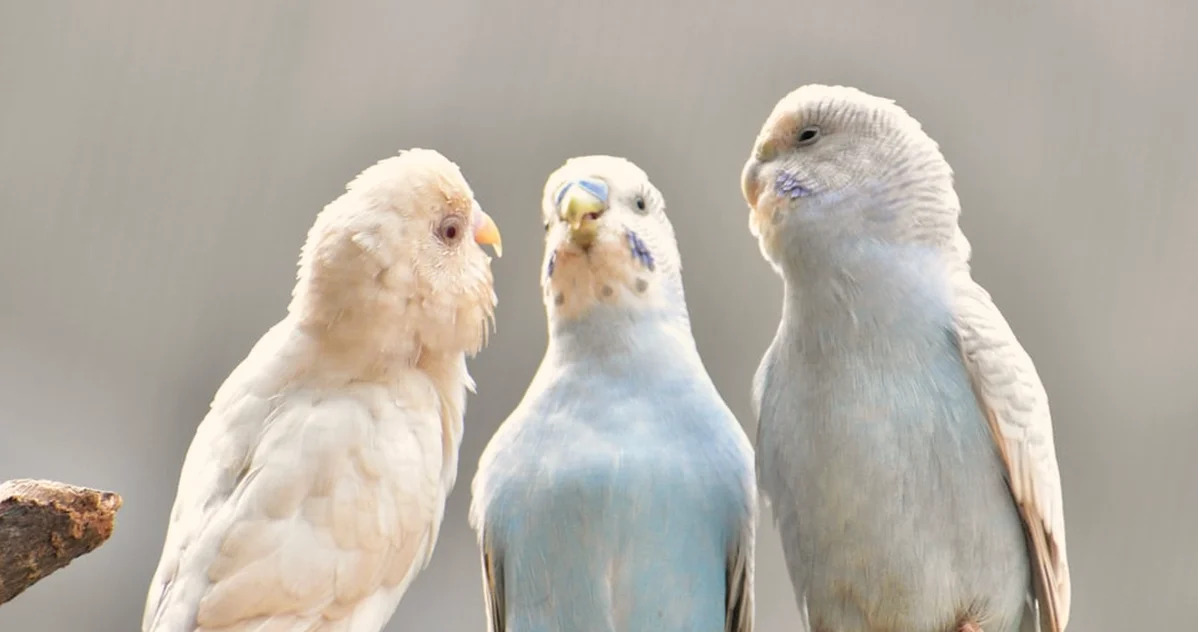
Read budgie vocalisations with body language
Budgie vocalisations are shaped by the moment. They are not a fixed dictionary of sounds.
Soft chatter and beak grinding
Soft chatter and gentle warbling often happen when a budgie feels settled. Beak grinding often happens then too.
Beak grinding is quiet rubbing between the upper and lower beak. It is like someone settling into bed. Budgies often make this sound before sleep.
Contact calls and loud cries
A contact call is a short sound that helps locate a companion. Answer with a calm word or the same short whistle.
Then give your budgie time to settle. Do not rush over every time it calls.
Posture completes the message
Head bobbing can mean excitement, feeding behaviour, social display or hormone-related interest. Female budgies can bob their heads too.
Head bobbing is not a safe way to identify sex. A vet or skilled bird professional can assess sex more safely when care choices depend on it.
Budgie body language and vocalisations should always be read together. Soft chirps from a preening, eating bird usually show low-alert social sound.
Contact calls often repeat when a companion leaves the room. They may also repeat when that companion goes out of sight.
Alarm calls tend to sound sharper and louder. They often come with an upright stance, wide eyes, freezing or fast escape moves.
An unusual silence matters most with other stress signs. These include fluffed feathers, less feeding, sleepiness or poor balance.
This combination needs prompt avian veterinary care. Do not wait for the bird to become more vocal.
Advertisement
Separate fear, boredom and hormonal behaviour
Fear, boredom and hormonal behaviour can look alike. Each can lead to calls, nipping or restlessness.
Fear and neophobia in a new home
Neophobia means fear of a new thing. It is common after adoption, a cage move or new food.
It can cause freezing, fast retreating, alarm calls or refusal to approach favourite seed. Give the bird time to judge the item safely.
New item 1 metre away
Move closer if eating normally
Place near cage, not doorway
Add inside and inspect daily
Hormonal behaviour can include regurgitating for a mirror. Guarding a corner or seeking dark cupboards can show it too.
Avoid nesting boxes unless you are breeding with care and purpose. For pet budgies, a box can invite breeding rather than offer a cosy bedroom.
Boredom needs choice, not clutter
Environmental enrichment gives safe chances to search, shred, climb, move and choose. It does not mean filling every spare cage bar with toys.
A crowded cage can block clear routes. A budgie needs these routes to hop, flap and retreat.
Although enrichment is valuable, crowded cages often cause stress. Leave open space around food, water and favourite perches.
Age and personal needs change the meaning of many behaviours. Young budgies may bob more, climb clumsily and approach new foods with care.
Older birds may need lower perches and easier meal access. They may also need changes introduced more slowly.
Sex alone does not explain personality. Either sex can be quiet, bold, territorial or very people-focused.
Social behaviour also differs between one bird and a pair. A lone budgie may call more for its person.
Bonded birds may preen each other more. They may also communicate more with each other.
Compare each bird with its own normal routine. This matters when judging appetite, activity and hormonal behaviour.
Build trust through calm two-way communication
Two-way communication means responding to your budgie's calls and limits. It also means letting the bird choose whether to engage.
Answer calls without creating dependence
Reply to a contact call with a low, familiar voice. Then wait for a quieter moment before approaching.
Reward calm play away from you with praise. You can also give a tiny food reward or a favourite safe activity.
Teach step-up by invitation
Offer a finger or hand-held perch just below the chest. Say the same cue each time.
Reward one foot, then two feet. Keep early sessions to 3 to 5 minutes.
Use a weekly plan, not more toys at once
A safe weekly routine alternates foraging, exercise, training and rest. Change only one or two toys at a time.
A practical seven-day rotation
| Day | Main activity | Time or amount | Safety check |
|---|---|---|---|
| Monday | Paper forage with usual food | 10 minutes supervised | Plain paper, no ink flakes |
| Tuesday | Flight or safe room movement | Short supervised session | Shut windows, switch off fans |
| Wednesday | Perch step-up practice | 3 to 5 minutes | Stop at fear signals |
| Thursday | Fresh vegetable exploration | Small familiar portion | Remove uneaten food promptly |
| Friday | Swap one safe chew toy | One item only | Check size and loose threads |
| Weekend | Routine, rest and observation | 10 to 12 hours dark sleep | No late lights or major changes |
Interactive budgie toys work best when introduced one at a time and rotated. Do not leave them in the cage permanently.
Choose a size that allows climbing and chewing without trapping toes or beaks.
- Gives a budgie a safe object to shred or explore between supervised flight sessions
- Makes it easier to rotate one activity while keeping familiar perches and feeding points unchanged
- Offers foraging-style activity when food can be hidden safely in plain paper or approved compartments
Food and toys need separate roles
Foraging can hide a small part of the normal seed mix or pellets. Use safe paper or a purpose-made feeder.
It must not make meals hard to reach. This matters most for new, old or unwell budgies.
Remove fresh vegetables before they spoil. Change fresh water every day.
Safe cage enrichment starts with materials and placement. It does not start by buying more accessories.
Avoid painted or unknown metals when adding new toys. Avoid loose plastic pieces, chewable glue, scented items, treated wood and badly frayed ropes.
Frayed ropes can trap toes, beaks or necks. Check them often and remove them early.
Bells should have no narrow gaps, loose clappers or sharp edges. Avoid mirrors if they trigger ongoing regurgitation, guarding or fixation on a reflected bird.
The most common mistake is buying several toys at once. A budgie needs clear routes between food, water, perches and the cage door.
Remove a toy if it causes lasting fear. Remove it if it causes frantic climbing or blocks normal rest.
Advertisement
Common questions
How do I communicate with a budgie bird?
Speak softly and answer contact calls calmly. Respect a bird that leans away, and reward voluntary interaction.
Keep first training sessions between 3 and 5 minutes. Stop before the budgie becomes tense or tired.
How do budgies typically behave?
Budgies often chatter, preen, forage, climb, nap and seek social contact. They are flock birds.
Normal behaviour varies with age, personality, sex and home routine. It also varies if they live alone or in a pair.
What is the IQ level of a budgie?
Budgies do not have a human IQ score. They can learn sounds, routines and simple problem-solving tasks.
Researcher Irene Pepperberg's work with parrots shows a better approach. Judge bird learning through skills that suit the species, not human tests.
How do budgies communicate with each other?
Budgies use contact calls, chatter, distance, posture and mutual preening. These signals help them track flock members.
A pair may talk more to each other than to you. This is usually normal if both birds stay healthy and active.
Why is my budgie bobbing its head and chirping?
Head bobbing and chirping can show excitement, social interest, feeding behaviour or hormones. Read the whole pattern.
Treat it as a health concern with poor balance or less appetite. Breathing changes, vomiting or a marked activity drop also need veterinary advice.
Is my budgie stressed if it is quiet?
A newly quiet budgie may be stressed or ill. This is more likely if it stays fluffed up, eats less or sits low.
Watch a mild change for 24 to 48 hours only if the bird seems well. Seek an avian vet sooner if other warning signs appear.
Further reading
If you want to learn more about this topic, these sources may interest you:
- Behavior and enrichment – Lafeber® Pet Birds — lafeber.com
- Normal Budgie Behaviour — omlet.co.uk
- Overfilling your cage with budgie toys can stop flight
- A budgie chirp’s meaning changes with its posture

Editorial Team
Our team consists of passionate British birdwatchers and garden wildlife enthusiasts. We provide honest, practical advice on feeding garden birds, choosing the right feeders, and making your outdoor space a haven for UK wildlife — guided by RSPB best practice and real garden experience.
The information on this website is provided for general guidance only. Always follow RSPB and BTO best practice when feeding garden birds. Product recommendations may include affiliate links — see our disclosure policy for details.