Budgie toys should keep your bird busy without turning its cage into an obstacle course. Leave clear room between perches for short flights, and watch how your budgie uses the space: hesitation, clipped wing movements or ignored toys can mean the cage feels too crowded.
The best budgie toys match a real behaviour: chewing, climbing, foraging, swinging or exploring. Start with 2–4 safely sized toys and rotate one or two each week; choose untreated wood, bird-safe rope and secure fittings, removing frayed rope, loose bells, chipped paint and damaged parts promptly.
Table of Contents
Advertisement
Choose toys by behaviour, not bright colours
Choose toys by the behaviour your budgie already shows, rather than buying the brightest item available.
Match the toy to what your budgie does
Offer chewable untreated wood or paper to bar-chewers, and hide a few normal seeds in folded paper for birds that wait beside food bowls.
Keep a clear route through the cage
Keep the centre clear so your budgie can flap and move between perches; place toys at sides or corners, away from water and food.
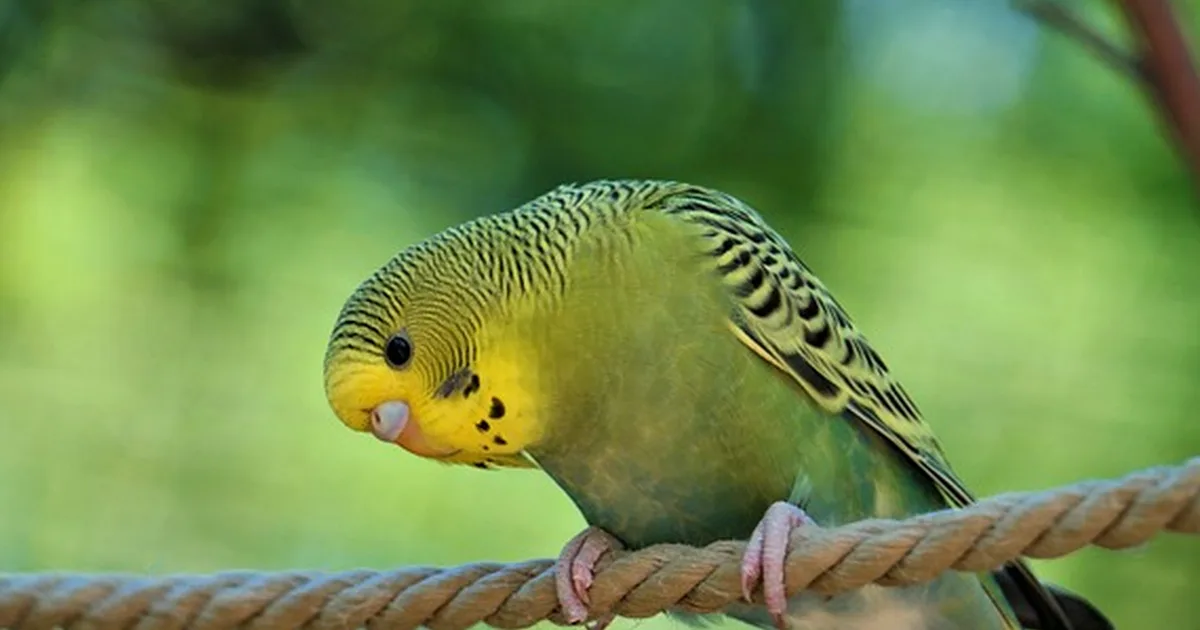
For birds that like to move around rather than destroy items, choose lightweight budgie climbing toys such as a securely fixed small ladder, a natural-wood bridge or a low climbing frame with closely spaced, smooth rungs. A small bird swing can support balance and confidence, while budgie chewing toys placed at one side give an active bird another safe task. Keep these budgie cage toys away from the central route: good bird cage layout protects the budgie flight space between perches.
Older, less confident or newly arrived birds often do best with one stable, low item first, while confident climbers may enjoy a second option during toy rotation for budgies.
Check materials, fittings and cage space first
Safety depends on materials, fittings and a size that suits small feet and beaks; inspect every toy daily for entanglement risks.
Materials that deserve a second look
Choose untreated wood, plain paper, palm leaf and bird-safe rope from known makers; avoid peeling paint, unknown glue and sharp plastic.
Ropes, bells and clips need daily checks
Remove cotton, sisal or fabric rope when fibres fray, and check bells, clips and links for gaps that could trap toes or tongues.
| Toy type | Main behaviour | Material to seek | Check level | Replace when |
|---|---|---|---|---|
| Shredding toy | Chewing | Plain paper, palm leaf | Daily | Wet, soiled or loose parts |
| Wood blocks | Chewing | Untreated wood | Daily | Splintered or loose |
| Foraging cup | Food searching | Smooth steel or safe plastic | Daily | Cracked or hard to clean |
| Small swing | Balance | Wood with secure fittings | Daily | Rope frays or fittings loosen |
A small mix of shredding and foraging items can cover two useful behaviours without filling every bar of the cage. Compare fittings and dimensions carefully before choosing any pack.
- Helps a budgie chew and explore away from cage bars
- Lets you select lightweight items suited to a small cage
- Makes it easier to rotate one item rather than change the whole cage
Use a quick cage toy safety check before buying as well as during daily inspection. Select safe budgie toys with parts sized for a small beak and feet, secure clips, no sharp edges and no loose pieces that can be swallowed. Avoid galvanised or zinc-coated wire, chain and hardware, because zinc can be harmful if chewed or ingested; stainless-steel fittings from a reputable bird supplier are a better choice.
Check that paint is not chipped and that untreated wood toys have no unknown varnish or adhesive. Mirrors are not inherently poisonous, but remove one if a budgie becomes fixated on its reflection, guards it, regurgitates to it or reduces normal interaction with people or another bird.
Advertisement
Introduce and rotate toys without causing fear
A shy budgie should meet one unfamiliar item at a time, first outside the cage for roughly 3–7 days.
Let the bird set the pace
Leave the item near the cage, then attach it outside before moving it in; wait until the bird eats, preens and rests normally nearby.
Rotate for interest, not constant change
Swap one or two toys every 7–14 days while replacing damage immediately; calm chewing and exploring are good signs, but fear flights are not.
When toys are not the first answer
Toys are not the first answer if a budgie is ill, fluffed up, not eating or suddenly behaving differently.
Fix the cage and routine first
Provide enough cage space, safe out-of-cage exercise, social contact and natural wood perches first. Use simple foraging with measured normal seed, but seek an avian vet for illness.
Simple homemade activities can provide useful budgie enrichment without filling the cage with commercial products. Offer a small piece of plain, unprinted and unscented paper in a secure clip for supervised shredding, or place a measured portion of your budgie’s usual seed under loosely crumpled paper in a clean dish to create an easy food search. Avoid staples, tape, glue, dyed paper and loose thread.
Short target-training or step-up sessions, supervised out-of-cage time and changing the location of a familiar foraging activity can also add variety. These options work alongside commercial foraging toys for budgies, rather than replacing daily exercise, social contact and a suitable routine.
What people ask
What toys do budgies like most?
Budgies often enjoy shreddable paper, untreated wood, simple swings and easy foraging toys; introduce one type at a time.
How many toys should a budgie have?
Most small cages suit two or three well-spaced toys while keeping a clear flight route.
Are rope toys safe for budgies?
Rope toys are safe only while fibres stay tight and fittings are secure; remove them when they fray.
Should budgies have mirrors?
Mirrors are optional and should never replace company or interaction; remove one if it causes distress.
Advertisement
Build a calmer, safer toy setup
A calmer setup starts with a clear route, a small selection matched to natural behaviour, and daily safety checks. Introduce change gradually, rotate only part of the selection, and treat sudden withdrawal or appetite loss as reasons to seek veterinary advice promptly.
- Choose each item for chewing, foraging, climbing, swinging or exploring.
- Start with two or three lightweight toys and protect the cage's open flight route.
- Inspect ropes, bells, clips and surfaces every day, replacing damage without delay.
- Change one or two items every 7–14 days, using a slower pace for fearful birds.
- Seek avian veterinary help for sudden quietness, poor appetite or fluffed-up posture.
Related sources
These articles can help you explore the topic in more depth:
- Budgie Toys — parrotessentials.co.uk
- Colourful & Varied Range of Budgie Cage Toys — scarlettsparrotessentials.co.uk
- Budgie Toys — gardenfeathers.co.uk
- Budgie Toys for sale — ebay.co.uk

Editorial Team
Our team consists of passionate British birdwatchers and garden wildlife enthusiasts. We provide honest, practical advice on feeding garden birds, choosing the right feeders, and making your outdoor space a haven for UK wildlife — guided by RSPB best practice and real garden experience.
The information on this website is provided for general guidance only. Always follow RSPB and BTO best practice when feeding garden birds. Product recommendations may include affiliate links — see our disclosure policy for details.