A robin nest box should be open-fronted, deep enough to shelter the nest and fixed in a quiet, covered spot rather than high in full view. Place it 1–2 metres above ground, away from feeders and cat launch points, with vegetation nearby so a robin can approach without crossing open ground.
Table of Contents
Advertisement
Choose an open-fronted box, not a tit box
European robins (Erithacus rubecula) need an open-fronted nest box, meaning a box with a wide open face rather than a small round entrance hole.
Circular-hole boxes are designed for birds that enter a small tunnel-like opening. Robins are ground-feeding thrush relatives with different nest-site preferences, so they usually ignore these enclosed designs even when they visit the garden daily.
Breeding boxes are not roost pockets
Look for an internal depth of roughly 120 to 180 mm below the opening. That distance helps keep the nest cup out of sight and reduces the chance of eggs falling or being reached from outside.
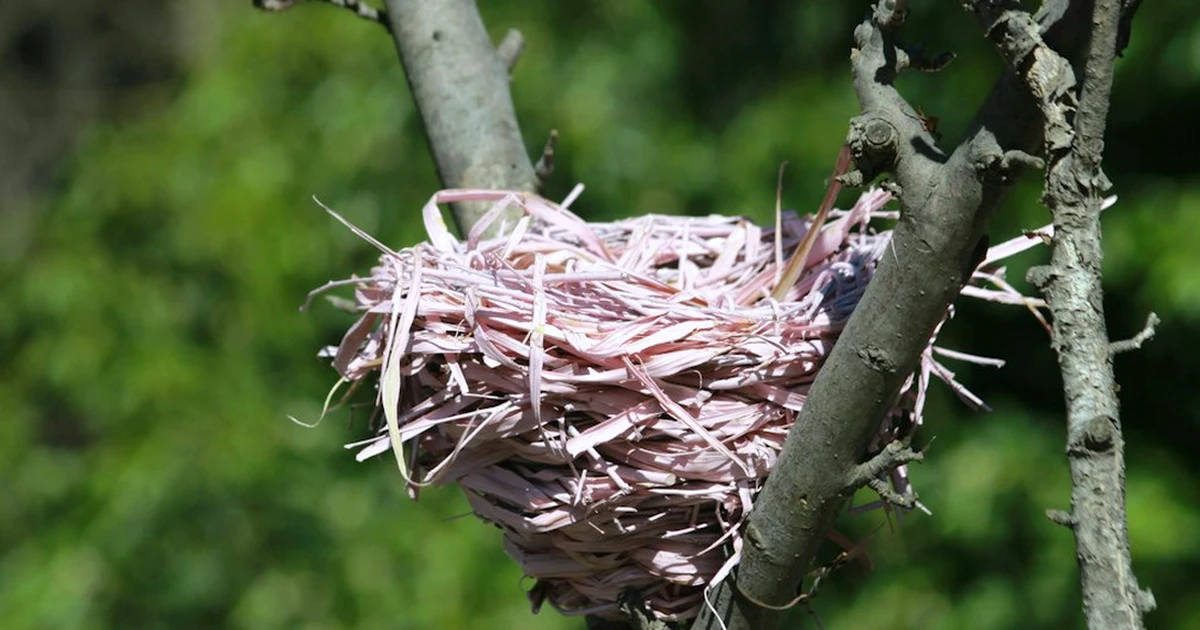
Place it low, hidden and away from feeders
Place the box 1 to 2 metres high in a quiet boundary of dense shrubs, ivy or climbers, facing away from the wettest prevailing wind.
Keep the box at least 3 to 5 metres from a busy bird feeder where the garden layout allows it. Feeding stations attract queues of tits, sparrows, pigeons, squirrels and visiting cats, creating noise and movement close to a breeding territory.
A box should avoid direct, persistent rain and should lean very slightly forwards. That small tilt lets water run off the roof and away from the entrance, like tipping a wet umbrella so water does not drip onto your shoes.
Dense native shrubs, evergreen climbers and established hedge growth can hide the route to the box. Good cover should be near the approach, while the immediate entrance remains clear enough for a robin to fly into safely.
A box can remain empty for a season or longer without being unsuitable. Robins choose sites according to territory, cover and disturbance, so avoid moving an unused box repeatedly during spring. Instead, improve the sheltered nesting site: retain dense shrub cover, allow ivy and climbers to create a concealed approach, and use native hedge planting where there is an exposed boundary. Keep the entrance flight path clear, limit pruning near the box from March to August, and maintain a sensible bird feeder distance so regular feeding activity does not dominate the nesting area.
A quiet garden boundary with cover and few interruptions is more likely to be investigated over time.
Advertisement
Match the box site to your garden layout
The best mounting site is the quietest dry place with plant cover, a stable fixing point and no easy predator launch point.
Wall, tree or hedge: which is safest?
A wall or shed gives a firm fixing point and is easy to monitor from a distance. A tree can work, but only if it is not used as a climbing route by cats or squirrels and the fixing does not damage living bark.
| Site | Best use | Cat risk | Fixing method |
|---|---|---|---|
| Shed or wall | Quiet planted boundary | Low to medium | Screws into sound timber or masonry |
| Mature tree | Sheltered trunk with no climbing route | Medium to high | Adjustable non-damaging strap |
| Dense hedge | Stable inner framework | Medium | Secure bracket to hidden support |
| Bare fence | Only after planting cover grows | High | Screws, away from rail ends |
What if cats visit every day?
No nest box is cat-proof. Reduce risk by keeping it away from fence rails, bins, shed roofs and branches that let a cat jump towards the box or wait below it.
Can a small garden still work?
A small garden can support a nesting robin if its functions are separated. Put the box in the quietest planted edge, keep feeders at the opposite end where possible, and avoid placing it beside seating, a back door or a children’s play area.
Build or buy a box that stays dry and deep
Buy or make an untreated timber box with a floor around 120 to 150 mm wide, an internal depth of 120 to 180 mm, drainage holes and a roof overhang.
The dimensions that keep nests secure
For a DIY box, cut one back panel at 300 x 180 mm, two side panels at 220 x 150 mm, a floor at 150 x 150 mm, a front panel at 140 x 150 mm and a roof at 230 x 210 mm.
A deep, open-fronted wooden design is a sensible starting point if you prefer not to build one. Check the internal depth and roof overhang before choosing, rather than relying on photos alone.
- Open front gives robins the entrance style they are more likely to investigate
- Deep interior keeps the nest cup lower than the exposed front edge
- Wooden construction can be cleaned after breeding when the box is empty
Which materials and finishes are safe?
Use untreated FSC-certified timber where possible. Leave inside surfaces bare, because chicks may peck at flakes of paint or varnish and need grip on the wood when they prepare for fledging.
Check, clean and leave it alone
After autumn, when you are certain it is empty, wear gloves, remove old nesting material, brush out loose debris and rinse with boiling water. Let the box dry completely before closing it again.
When comparing a garden bird nesting box, look beyond the product photograph. A useful robin model has an open front, a floor about 120–150 mm wide and enough depth below the front edge to keep the nest cup concealed. Untreated timber is usually longer-lasting and better insulated than thin decorative wood, while a hinged roof or side panel makes cleaning easier. As a practical comparison, choose a deep open-fronted box for European robin nesting and wrens; avoid small-hole designs intended for blue tits or great tits.
Check for drainage holes, roof overhang, solid fixings and replacement parts, because these details often matter more than an attractive finish.
Treat maintenance as a seasonal routine rather than a task only for the day you notice debris. Before spring, check that screws, straps, roof and drainage holes remain secure and that the box still has a slight forward tilt for rain protection. During active European robin nesting, do not open, move or clean the box; adult birds may be using it even when activity is hard to see.
Once the breeding season has finished and you are certain it is vacant, usually in autumn, remove old material with gloves, brush out debris and use boiling water only, without disinfectants. Let it dry fully, refit it firmly and check nearby vegetation without exposing the entrance.
Common questions
What is the best nest box for robins?
The best nest box for robins is a deep, open-fronted wooden breeding box with drainage and a projecting roof. Fit it 1 to 2 metres high in sheltered vegetation, not in full view.
When should I put up a robin nesting box?
Put up a robin box in autumn or winter so birds can inspect it before spring. It can still be installed before breeding, provided the site is quiet and you do not disturb an active nest.
Where should I put a robin nest box in the UK?
Place it 1 to 2 metres high in leafy cover, away from feeders and direct rain. In much of England, a sheltered east or north-east aspect is often practical.
Do robins actually use nest boxes?
Robins may use a box when it has an open front, deep nest space and a concealed approach. They often reject exposed boxes, even where robins feed in the garden every day.
How far should a robin box be from a bird feeder?
Keep a robin box at least 3 to 5 metres from a busy feeder where space permits. This reduces disturbance from feeding birds, squirrels and animals drawn to spilled seed.
- Choose a deep open-fronted box, not a small-hole tit box.
- Fix it 1 to 2 metres high in quiet cover with a sheltered flight path.
- Keep feeding activity and nesting space separate by at least 3 to 5 metres where possible.
- Use drainage, a roof overhang and a slight forward tilt to prevent damp nesting material.
- Clean only when the box is certainly empty after the breeding season.
Advertisement
Learn more
Here are some additional resources on this subject:
- RSPB Robin and Wren diamond nest box — shopping.rspb.org.uk
- Open-fronted robin nest boxes - Shipped from the UK — birdfood.co.uk
- Best Robin Nest Boxes | Bird Boxes For Robins — arkwildlife.co.uk
- Waiting for spring can leave nest boxes unnoticed
- Does shade stop your bird bath fountain from working?

Editorial Team
Our team consists of passionate British birdwatchers and garden wildlife enthusiasts. We provide honest, practical advice on feeding garden birds, choosing the right feeders, and making your outdoor space a haven for UK wildlife — guided by RSPB best practice and real garden experience.
The information on this website is provided for general guidance only. Always follow RSPB and BTO best practice when feeding garden birds. Product recommendations may include affiliate links — see our disclosure policy for details.