Table of Contents
Advertisement
Choose a feeder for English birds and wet weather
Choose a feeder that keeps food dry, drains well and suits the birds that visit your garden.
Which design suits your usual visitors?
Bottle feeders suit tits, sparrows and finches; shallow twig trays suit robins, blackbirds and dunnocks that prefer standing to clinging.
| Design | Typical cost | Useful life | Rain and cleaning | Best visitors |
|---|---|---|---|---|
| Plastic milk-bottle feeder | £0 to £3 | 2 to 6 months | Good with drainage and wide opening | Tits, sparrows, finches |
| Cardboard carton | £0 | 1 to 3 dry days | Poor, supervised use only | Short school activity |
| Pine cone with suet | £0 to £2 | 1 to 2 days filled | Poor in rain, easy to replace | Tits and small clingers |
| Twig tray | £0 to £5 | 1 to 3 months | Fair if shallow and removable | Robins, blackbirds, dunnocks |
Will rain ruin a bottle or carton?
Cardboard is only suitable for a short, supervised activity; a cleaned milk bottle lasts longer and can be washed.
For wet-weather bird feeding, place the feeder where it is visible from indoors but not beside a cat’s hiding place. Leave roughly 1.5 to 2 metres between a ground tray and dense shrubs, while keeping a tree or open escape route nearby so small birds can retreat safely. A roofed spot reduces wind-driven rain, although it should not prevent you from checking the food.
To limit squirrel access, hang feeders from a smooth pole with a baffle or from a branch away from fences and walls. Use a shallow catch tray only if it can be emptied often: spilled seed can attract rodents and become damp.
For a child-friendly recycled bird feeder project, choose the material to match the time available and supervise all cutting. A milk bottle bird feeder is a good medium-difficulty option: an adult can cut two small feeding ports, smooth the rims and make bird feeder drainage holes in the lowest part. Check that all cut edges are smooth before children decorate the outside with non-toxic materials. For a quicker activity, make a pine cone suet feeder by pressing suitable suet into the scales and hanging it with natural string; it is best used in dry weather.
A twig tray feeder is easy to assemble from short, clean twigs and twine, but needs fresh food each day. For whole nuts, use a purpose-made peanut mesh rather than a homemade open tray.
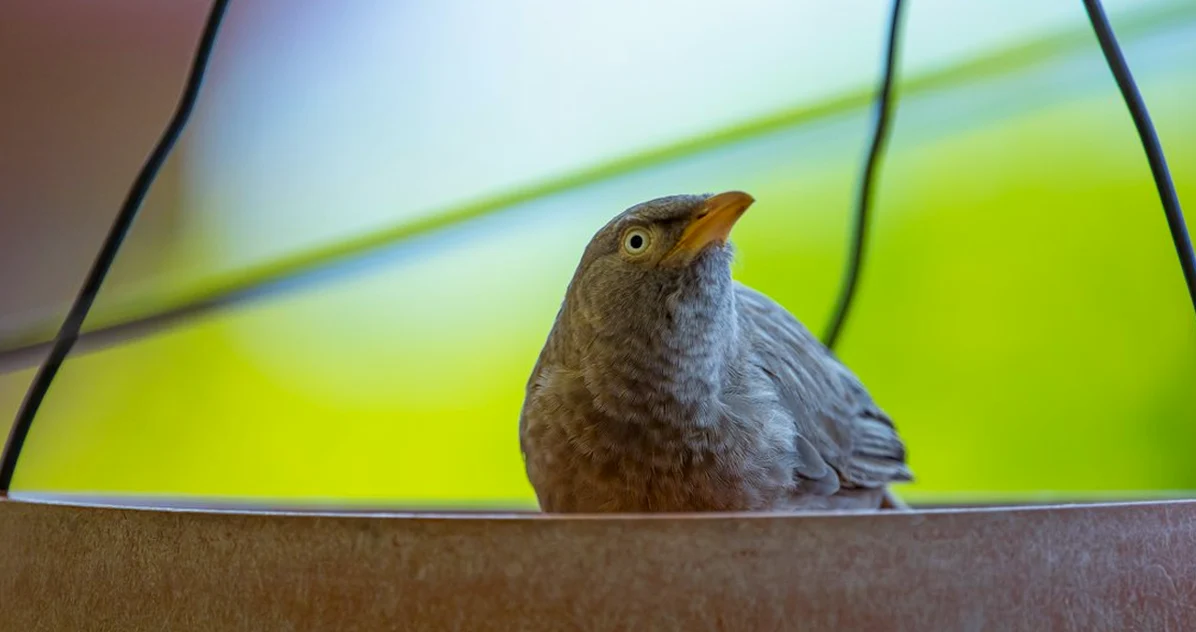
Build drainage and cleaning into the feeder
Build drainage, smooth edges and a wide cleaning opening into any recycled feeder.
Where should drainage holes go?
Put four to six 3 to 5 mm holes at the true bottom of the seed chamber, below the food level.
How do you make cut edges bird-safe?
Sand rough plastic, cover sharp rims and avoid cracked containers, frayed string and flaking paint.
If a recycled feeder cannot be scrubbed fully, a basic washable feeder is the kinder choice for birds. Look for a removable base and roof rather than extra perches.
- A removable base lets you clear damp seed from the lowest point.
- A roof keeps a larger share of seed dry during regular showers.
- Rigid feeding ports reduce sharp, cracked edges from repeated use.
Good bird feeder hygiene means removing old food before it is covered by a fresh refill. For bird feeder cleaning, empty all seed, brush away husks and droppings, then wash the feeder with hot water and a bird-safe disinfectant or a mild unscented washing-up solution. Rinse it thoroughly and allow it to dry completely before adding food. Washing bird feeders weekly is a useful minimum, but do it more often during mild, wet spells or when several birds are feeding heavily.
Seed feeder maintenance also includes checking ports, bases and drainage holes for blockages. Damp bird seed should be bagged and binned rather than tipped beneath the feeder, where it may grow mould or draw pests.
Advertisement
Fill it with food garden birds can safely eat
Offer fresh food in small amounts and remove anything damp, mouldy or heavily fouled.
Which foods work in each feeder?
Sunflower hearts suit seed feeders, peanuts need mesh feeders, and suet needs a holder or net-free pine cone.
| Food | Safe form | Where to offer it | Avoid |
|---|---|---|---|
| Sunflower hearts | Dry and fresh | Seed feeder or tray | Wet clumps |
| Peanuts | Unsalted, mould-free | Mesh peanut feeder | Loose whole nuts for young birds |
| Suet or fat balls | Purpose-made, fresh | Suet holder or pine cone | Plastic mesh nets |
| Porridge oats | Plain, dry, uncooked | Small amount on tray | Milk, salt, sugar, cooked porridge |
Are oats and kitchen scraps safe?
Offer only plain, dry, uncooked oats in small amounts; avoid salty, seasoned, mouldy or dairy-containing scraps.
Your questions answered
Why put a potato in a bird feeder?
You do not need potato; offer only plain cooked pieces on a clean tray.
Why should I sprinkle coffee grounds around my bird feeder?
Do not use coffee grounds: they do not reliably deter pests and can become mouldy.
How can I make a simple bird feeder?
Use a clean two-pint bottle with smooth ports, drainage holes and a wide wash opening.
Can I give porridge oats to birds?
Yes, but only plain, dry, uncooked oats in small amounts.
How often should I clean a bird feeder?
Clean it at least weekly, and sooner after rain, fouling or wet seed.
Where should I hang a feeder to avoid cats?
Hang it 1.5 to 2 metres from dense cover and hiding places.
Can I leave seed out for a week?
Only if it stays dry and clean; remove damp seed immediately.
- The essentials: a bottle feeder with drainage and a wide wash opening is the best low-cost choice for many English gardens.
- The essentials: feed small amounts of fresh sunflower hearts, suitable seed, peanuts in mesh, or proper suet.
- The essentials: discard wet or old food rather than burying it under a refill.
- The essentials: stop feeding and clean thoroughly if illness, heavy fouling or local outbreak advice appears.
Learn more
Here are some additional resources on this subject:
- How to make a bird feeder — nhm.ac.uk
- Make your own bird feeder — rspb.org.uk
- Easy DIY bird feeder make for small children - CBeebies — bbc.co.uk

Editorial Team
Our team consists of passionate British birdwatchers and garden wildlife enthusiasts. We provide honest, practical advice on feeding garden birds, choosing the right feeders, and making your outdoor space a haven for UK wildlife — guided by RSPB best practice and real garden experience.
The information on this website is provided for general guidance only. Always follow RSPB and BTO best practice when feeding garden birds. Product recommendations may include affiliate links — see our disclosure policy for details.