Spilt seed and soggy husks beneath a feeder can attract rodents and create a garden hygiene problem. A bird feeder with tray should catch waste, drain quickly and suit your feeder, rainfall and regular visitors.
Table of Contents
Advertisement
Choose a tray that catches seed and drains
Choose a shallow, removable tray with open drainage rather than the largest model available.
An 8 to 15 cm overhang catches husks
A tray extending 8 to 15 cm beyond the tube catches most flicked sunflower hearts and mixed seed. This gives birds room to pick up dropped food while stopping much of it reaching paving, lawns and flower beds.
Keep the rim shallow for goldfinches, siskins and house sparrows. A high rim can turn the tray into a wall for a small finch, rather like asking a child to reach over a kitchen worktop. Larger birds such as starlings can manage a stronger, deeper tray, but they may also dominate it.
Tool-free removal matters most
Choose a tray that twists off, unclips or slides free without tools. You should be able to remove it after rain, empty husks from around the fitting point and rinse every surface before refilling. Avoid trays that require dismantling the whole feeder, as they are more likely to be left in place with damp seed.
When comparing hanging tube feeders, look beyond their overall width. A practical buying check is a removable feeder tray with a feeder tray overhang of 8 to 15 cm, a shallow tray rim of around 1 to 3 cm and several clear drainage holes rather than one small central opening. Check that the tray releases without tools, because effective bird seed drainage depends on being able to remove compacted husks quickly.
For a small patio, two to four feeding ports and a modest seed capacity help limit stale food; busier gardens can use more ports, provided the tray remains easy to lift and wash.
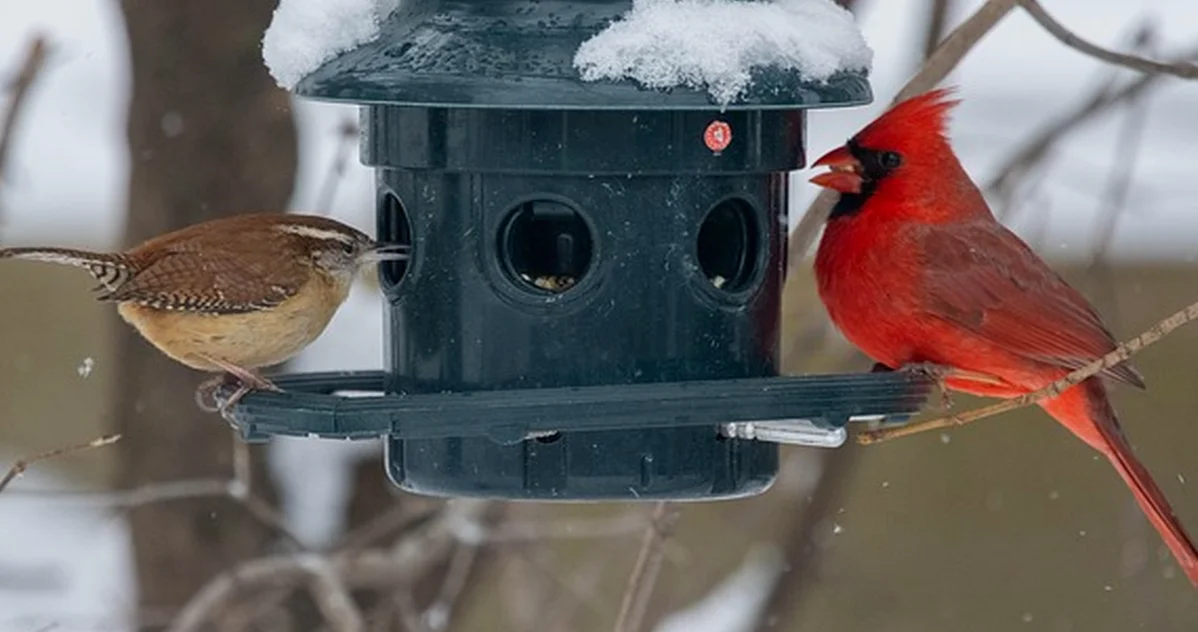
Best tray feeder for your garden and birds
Match the feeder to the food, visiting species and available space.
Small patios need controlled portions
A removable seed catcher tray is most useful where seed falls onto paving, balconies or a small lawn. Compare the drainage holes and tray fitting before choosing the largest feeder.
- Catches dropped sunflower hearts and husks before they reach patio surfaces
- Creates a lower feeding ledge for sparrows, tits and small finches
- Lets you remove damp food quickly after an English rain shower
Wet gardens need open drainage
| Feeder type | Best tray size | Food and birds | Rain and squirrel use |
|---|---|---|---|
| Hanging metal tube | 8 to 12 cm overhang | Sunflower hearts; tits, finches | Good drainage; pair with baffle |
| [Plastic](https://gardenbirdsguide.co.uk/don-t-buy-a-uk-metal-bird-feeder-with-plastic-guts/) tube | 8 to 10 cm overhang | Seed mixes; sparrows, tits | Check cracks and drain holes |
| Wooden platform | Low rim, 1 to 3 cm | Suet pellets; robins, starlings | Best under cover in persistent rain; easy squirrel access |
| Squirrel-resistant hanging feeder | 10 to 15 cm overhang | Hearts; tits and greenfinches | Useful near squirrels; still clean tray |
Seed choice should match both the feeder and the birds you hope to see. Sunflower hearts suit standard tube ports and create less husk litter, while a nyjer tube or fine-mesh insert is better for goldfinches and siskins. Use a close-fitting finch feeding tray for tiny seeds, as a wide open grid can let them blow away. Mixed seed can attract sparrows and tits, but inexpensive mixes often leave unwanted fillers as dropped bird food.
For robins, blackbirds and starlings, use a well-drained platform for larger foods such as suet pellets rather than expecting a small tube tray to serve every species.
Advertisement
Stop rain, mould and rodents around the tray
Keep the feeder away from fence tops, tables and dense shrubs that help squirrels and rodents reach dropped food.
Clean after rain and at least weekly
Empty wet seed, husks and soft suet after sustained rain. Wash the tray with hot soapy water, rinse thoroughly and let it dry before refilling; also sweep paving or rake the patch beneath the station.
Fit the feeder so that the tray hangs level and its drainage holes remain clear; a tilted seed catcher tray collects rainwater at one edge and allows damp food to compact. For wet seed prevention, empty the tray before prolonged rain where possible and keep only a day or two of food available during mild, damp spells. This also supports rodent prevention, because seed left beneath the station can germinate in spring, creating a regular food source for mice and rats.
Good garden feeder hygiene means checking the ground beneath the feeder as well as the tray. As part of seasonal bird feeder maintenance, inspect fittings and cracks in autumn, increase rain checks in winter, and remove sprouting seed promptly in spring.
FAQs
What is the best bird feeder with tray?
The best model has open drainage, an 8 to 15 cm overhang and tool-free removal. Use a shallow tray for sunflower hearts and small finches.
Does a seed catcher tray stop rats?
It reduces food reaching the ground but does not stop rats alone. Remove waste and avoid dense cover or fence routes.
How deep should a bird feeder tray be?
A rim of roughly 1 to 3 cm suits most small garden birds. Deeper rims hold more waste and can restrict access.
Should i use sunflower hearts in a tray feeder?
Yes. They leave few husks, but offer only one to two days’ worth in rainy weather and remove damp food.
How often should i clean a bird feeder tray?
Clean it whenever food is wet, mouldy or visibly soiled, and check after sustained rain. In dry periods, wash it at least weekly.
Can squirrels climb a feeder with a tray?
Yes. Use a hanging squirrel-resistant feeder and keep it away from fences, trees and tables where possible.
Can budgies eat food from a garden bird feeder?
Budgies should not share food, feeders or equipment with wild birds. Keep captive-bird hygiene separate to limit infection risks.
- Choose open drainage and removable parts before choosing the biggest tray.
- Allow an 8 to 15 cm tray overhang, but keep the rim low for small birds.
- Feed smaller amounts after rain and clear wet waste from both tray and ground.
- Keep feeders away from squirrel launch points and sheltered rodent routes.
Further reading
If you want to learn more about this topic, these sources may interest you:
- Bird Seed Feeders | Large & Metal Feeders with Trays and ... — birdfood.co.uk
- Bird Seed Trays | Tray Feeders — reallywildbirdfood.co.uk

Editorial Team
Our team consists of passionate British birdwatchers and garden wildlife enthusiasts. We provide honest, practical advice on feeding garden birds, choosing the right feeders, and making your outdoor space a haven for UK wildlife — guided by RSPB best practice and real garden experience.
The information on this website is provided for general guidance only. Always follow RSPB and BTO best practice when feeding garden birds. Product recommendations may include affiliate links — see our disclosure policy for details.