A sharp, rattling burst cuts through the morning: “chak-chak-chak”, quick and insistent from an apple tree or neighbouring roof. In England, this is usually the Eurasian magpie (Pica pica), whose harsh chatter differs from recordings of North America’s black-billed magpie.
Table of Contents
Advertisement
England’s magpie is Pica pica, not a US magpie
An English garden magpie is almost always the Eurasian magpie, Pica pica, a crow-family bird whose usual voice is rough and rattling rather than song-like.
The harsh chatter to listen for
The classic call is a dry, scratchy “chak”, “chack” or “jack”, often repeated three to seven times from a roof, tall tree or aerial. Several similarly rasping notes are more useful than one croaky sound.
Label recordings before comparing
When comparing an unfamiliar recording, use one labelled with the species, location, date and call type rather than a generic “magpie sound” title. A useful recording label might identify “Eurasian magpie, Pica pica, England, alarm call” or “pair contact chatter”, allowing the rhythm to be compared fairly with what is heard in the garden. Listen first for the number of notes, the gaps between them and whether the call is dry and rattling rather than musical.
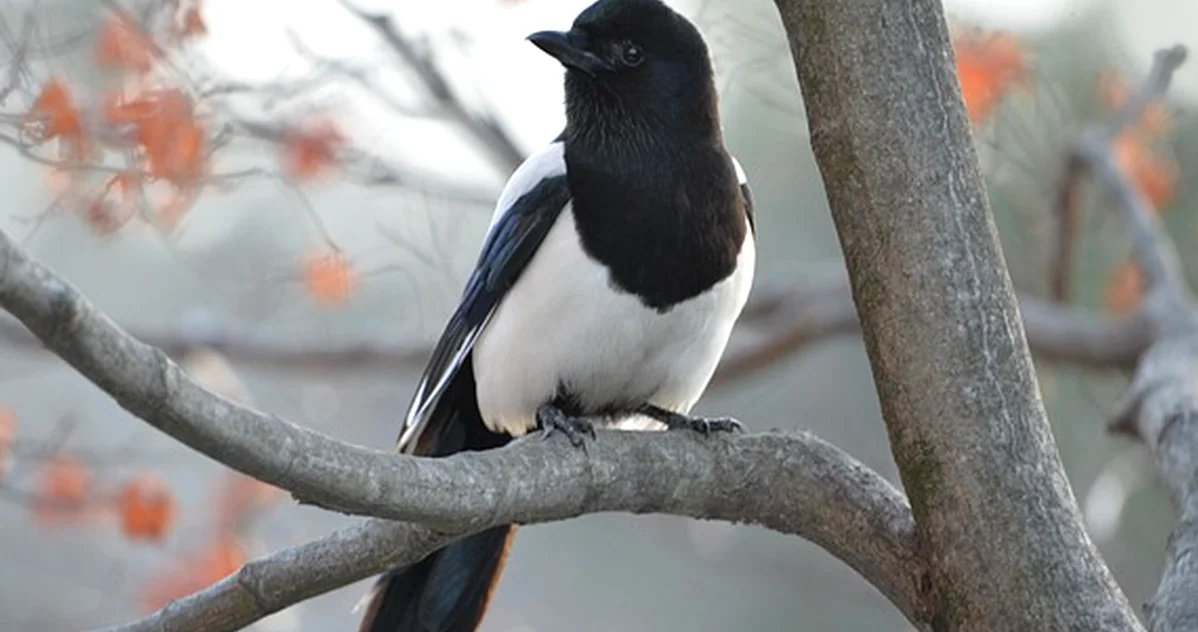
What a magpie call means in an English garden
Magpie chatter can signal alarm, contact, territorial tension or activity around food, so pair the sound with the bird’s perch, the time and nearby birds’ behaviour.
Alarm makes other birds vanish
Alarm chatter is often louder, faster and more urgent; sparrows, tits and blackbirds may freeze, then vanish into cover. A cat, sparrowhawk or person may be the real cause, rather than the magpie.
Dawn posts and paired chattering
Roof or tall tree
Likely alarm
Watch, do not assume
The Eurasian magpie call is not one fixed sound. A typical Pica pica sound is the familiar English magpie chatter, a repeated dry “chak-chak-chak”, but its pace and setting matter. A magpie alarm call is usually abrupt, emphatic and repeated when a cat, person or raptor is nearby. A magpie contact call is often less explosive: one bird gives short rattling notes and another answers from a nearby tree or roof.
A magpie territorial call can be persistent around dawn in late winter and spring, especially between paired birds. Juveniles may sound less crisp and more begging-like, with thinner, insistent notes when following adults.
A short phone recording made from a respectful distance can preserve those details, but it should not be played back near a nest, as playback may disturb breeding birds or alter their behaviour.
Advertisement
Tell magpies from crows, jackdaws and jays
Identify a Eurasian magpie through its repeated dry chatter together with its very long tail and bold black-and-white body.
| Bird | Typical burst | Sound | Useful visual check |
|---|---|---|---|
| Eurasian magpie | Often 3-7 notes | Dry, rasping chatter | Very long tail |
| Carrion crow | 1-3 notes | Deep “caw” | All black, broad bill |
| Jackdaw | 1-2 notes | Short “kyak” | Grey nape, pale eye |
| Eurasian jay | Brief bursts | Abrupt screech | Pink-brown body, blue wing patch |
| Common starling | Variable | Clicks, whistles, mimicry | Glossy dark flock bird |
Jackdaw calls are shorter and higher
A jackdaw call is typically shorter and higher than a magpie’s chatter.
Jays screech rather than chatter
A Eurasian jay screech is sharper and less regularly rattled than a magpie’s call.
Watch first, then change nothing or one thing
A magpie near a feeder does not automatically require action: keep stations clean, provide cover, and watch the pattern for several mornings before changing anything.
A recorder helps confirm rhythm
A simple recorder can capture the pace and number of notes while you watch the source, making comparison with a correctly labelled Eurasian magpie recording more reliable.
A small recorder can help compare the rhythm of a garden call with a correctly labelled Eurasian magpie recording. It also lets you listen again without standing beneath a nesting tree.
- Captures the number and spacing of harsh notes in a call burst
- Lets you compare dawn roof calls with noises heard at the feeder
- Creates a dated record if the same sound returns over several mornings
Keep nests and pets separate
Active magpie nests, eggs and young are protected under the Wildlife and Countryside Act 1981, so avoid disturbing occupied nests or using calls to diagnose injury or predation.
Magpies are adaptable British garden birds and may visit feeding stations for scraps, suet, peanuts, insects or the chance to inspect activity below a tray feeder. Their arrival can also coincide with other corvid sounds: a carrion crow call is deeper and slower. For garden bird identification, watch what happens after the call.
A magpie on a fence may be scanning before feeding, while two birds moving between cover and a feeder may simply be maintaining contact. Keep food fresh, clear up spillages and retain dense shrubs so smaller birds have cover without trying to exclude every larger visitor.
FAQs
What does a magpie sound like in England?
An English Eurasian magpie usually gives a harsh, repeated “chak-chak-chak” rather than a flowing song. Check for three to seven dry notes and a long tail.
Is a magpie alarm call a sign of an attack?
No. It may warn of a cat, sparrowhawk or person nearby; birds diving into cover supports an alarm interpretation but does not identify the threat.
Why do magpies call from my roof at dawn?
They are often keeping contact or marking territory. Two birds answering from separate high perches is a stronger clue than one calling near food.
Do magpies attack small birds at feeders?
Magpies may take eggs or young, but one at a feeder is not proof of an attack. Watch briefly before acting, as it may be feeding or scanning for danger.
How can I tell a magpie from a jackdaw by sound?
A magpie has longer, scratchier chatter; a jackdaw gives a shorter, higher “kyak”. A grey nape and pale eye support jackdaw identification.
Can starlings copy magpie sounds?
Yes. Common starlings can mimic harsh calls, but their mixed whistles, clicks and flock activity usually reveal them.
Should I stop feeding birds if magpies visit?
No. Continue healthy feeding with clean stations, cover and a smaller hanging feeder if tiny birds are repeatedly pushed from a tray.
Are magpie nests protected in England?
Yes. Active magpie nests are protected under the Wildlife and Countryside Act 1981, including eggs and dependent young.
- English garden recordings should identify Eurasian magpie, Pica pica, and the United Kingdom.
- Harsh repeated chatter means more when matched with perch, time and nearby bird behaviour.
- Jackdaws, crows, jays and starlings can confuse the ear, so use a visual check whenever possible.
- A magpie at a feeder is a reason to observe calmly, not a reason to assume harm.
Advertisement
Further reading
If you want to learn more about this topic, these sources may interest you:
- How to keep birds coming to your garden in nesting season — walesonline.co.uk
- Garden bird feeders — thestalkingdirectory.co.uk
- A bird's size and behaviour can reveal it before colour
- Refilling a Dirty UK Feeder Can Keep Birds Away

Editorial Team
Our team consists of passionate British birdwatchers and garden wildlife enthusiasts. We provide honest, practical advice on feeding garden birds, choosing the right feeders, and making your outdoor space a haven for UK wildlife — guided by RSPB best practice and real garden experience.
The information on this website is provided for general guidance only. Always follow RSPB and BTO best practice when feeding garden birds. Product recommendations may include affiliate links — see our disclosure policy for details.