Rain, husks and damp seed can quickly turn a tidy feeder into a risky feeding point. An RSPB bird feeder should suit the food, the birds, its position and, above all, the cleaning routine.
Table of Contents
Advertisement
Choose an RSPB feeder by cleaning access
Choose a feeder that lets you remove old food and reach every port; food type should determine the format, not appearance.
Match food to the feeder
Whole peanuts belong only in a fine-mesh peanut feeder. Loose peanuts or large pieces can be dangerous for young birds, which may struggle to swallow them safely.
Compare formats before buying
| [Feeder](https://gardenbirdsguide.co.uk/don-t-hang-a-squirrel-proof-bird-feeder-by-a-fence/) type | Suitable food | Likely visitors | Best position | Cleaning and access control |
|---|---|---|---|---|
| Seed tube | Sunflower hearts, quality seed mix | Tits, sparrows, finches | Hanging, clear flight path | Choose removable tube and ports; low [squirrel](https://gardenbirdsguide.co.uk/don-t-choose-squirrel-proof-fat-ball-feeders-by-cage/) control unless caged |
| Peanut feeder | Whole peanuts behind fine mesh | Tits, nuthatches | Suspended, sheltered from rain | Brush mesh weekly; medium squirrel control with a cage |
| Suet cage | Fat balls, suet [blocks](https://gardenbirdsguide.co.uk/why-your-pigeon-proof-feeder-blocks-robins/) | Tits, robins, starlings | Shaded hanging point | Wipe cage and tray; protection varies by cage spacing |
| [Bird table](https://gardenbirdsguide.co.uk/your-uk-bird-table-may-be-spreading-disease/) or ground tray | Mealworms, seed, fruit | Robins, blackbirds, dunnocks | Open ground with escape routes | Wash tray often; low squirrel and large-bird control |
A squirrel-proof cage is not automatically large-bird-proof: bar gaps, perch design and food type determine whether pigeons, starlings or parakeets can feed.
A guarded feeder can help where grey squirrels empty a tube in hours. Check that the ports, tray and cage can still be taken apart for washing.
- A protective cage can make sunflower hearts easier for smaller tits and finches to reach.
- A removable seed tray catches husks before they build up below the feeding point.
- Replaceable tubes and ports can extend a feeder’s useful life after weather damage.
A hanging seed tube feeder is usually the simplest choice for a small garden where tits, house sparrows and finches are the main visitors, provided it can be taken down easily for washing. Choose a feeder cage when smaller birds are being displaced by pigeons, parakeets or squirrels, but check the bar spacing before buying: a cage that excludes squirrels may still allow starlings to reach the food.
A feeding station suits gardens with room for several separate foods and a clear, accessible cleaning route. A bird table or ground feeding tray is better for robins, blackbirds and dunnocks, but it needs the closest supervision because food can become wet, trampled or contaminated quickly.
Before buying a feeder, check whether replacement ports, perches, hanging loops, lids and a removable seed tray are available for that exact model rather than assuming parts are interchangeable. Tube diameter, thread design and port fittings can differ even between similar-looking feeders, while a fine mesh feeder may need a model-specific cage or base. Regular bird feeder cleaning and complete drying will extend the life of plastic and metal parts, but cracked tubes, corroded mesh, loose perches or seals that admit rain are reasons to replace components.
Removing damp bird seed promptly is part of safe bird feeding: spare parts are useful only when the feeder can still be cleaned thoroughly and kept dry.
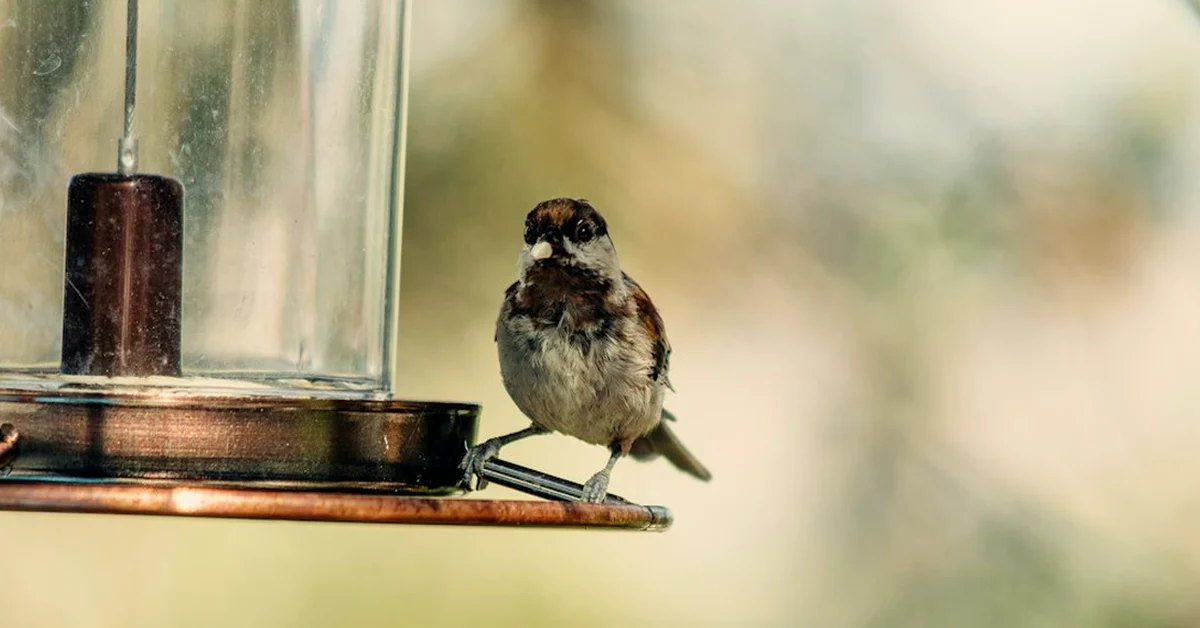
Warm weather needs a stricter routine
Supplementary feeding can continue all year, but warm, humid weather calls for smaller refills and frequent cleaning because damp, mouldy food or droppings can spread trichomonosis, an infection affecting a bird’s mouth and throat.
Clean ports, not just trays
Clean at least weekly, or every few days in rain, heat or heavy use. Empty and dismantle the feeder, wash removable parts in hot soapy water, rinse well, dry fully, then refill; brush inside ports rather than merely washing the tray.
Pause when birds look unwell
Pause feeding temporarily when disease risks or sick birds are present. Remove feeders, clean them, and follow guidance before restarting.
Advertisement
Place feeders 2 m from dense cover
Hang a feeder roughly 2 metres from dense shrubs or fences where cats can hide, while retaining nearby trees or cover as escape routes. Keep it high enough to prevent easy cat access, yet low enough to clean safely.
Cages have limits
Grey squirrels are hard to exclude completely. A baffle or cage can slow them, but wide bars may still admit starlings, and spilled seed can attract pigeons; use deterrents that never injure animals.
Keep nest boxes separate
Keep nest boxes away from busy feeders and falling seed. Active nests are protected under the Wildlife and Countryside Act 1981, so do not move or closely inspect an occupied box during nesting.
Water changed daily, native plants and safe shelter all supplement feeder food.
Common questions
Answers cover feeder buying, cleaning and positioning in England.
Do RSPB recommend bird feeders?
RSPB supports responsible feeding when food, feeders and ground stay clean. Choose a feeder by food type, and remove wet, clumped or contaminated food.
Should I sprinkle coffee grounds around my feeder?
Coffee grounds are not recommended squirrel deterrents. Use a baffle, guarded feeder and remove spilled seed promptly.
Why is RSPB saying not to feed birds?
Pause feeding temporarily when disease risks or sick birds are present. Remove feeders, clean them, and follow guidance before restarting.
Why has the RSPB stopped selling bird tables?
Product ranges change, but bird tables are not unsuitable. They need washable surfaces, daily wet-food removal and open space to reduce predator cover.
Where should i put a nest box in england?
Small-hole nest boxes should face north to east, away from strong sun and rain. Keep them away from feeders and never disturb occupied boxes.
Can wild bird food be fed to a budgie?
Wild bird seed mix is not a complete pet-budgie diet. Budgerigars need appropriate food, vegetables, clean water and enrichment; the Animal Welfare Act 2006 also covers captive animals’ needs.
- Choose a feeder whose tube, ports and tray can be cleaned fully.
- Offer only one to three days’ food in warm or wet conditions.
- Use fine mesh for whole peanuts and never put loose peanut pieces out for chicks.
- Place feeders about 2 metres from dense cover, with a clear escape route.
- Check replacement-part compatibility by model and diameter before buying.
Related sources
These articles can help you explore the topic in more depth:
- Our latest guidance on what and when to feed garden birds — rspb.org.uk
- Bird Feeders for Feeding Wild Garden Birds — shopping.rspb.org.uk
- Bird Feeder Accessories, Safety & Hygiene — shopping.rspb.org.uk
- Bird feeding | what & when to feed birds in your garden — rspb.org.uk

Editorial Team
Our team consists of passionate British birdwatchers and garden wildlife enthusiasts. We provide honest, practical advice on feeding garden birds, choosing the right feeders, and making your outdoor space a haven for UK wildlife — guided by RSPB best practice and real garden experience.
The information on this website is provided for general guidance only. Always follow RSPB and BTO best practice when feeding garden birds. Product recommendations may include affiliate links — see our disclosure policy for details.